Virtually all economists and traders are convinced that a reduction in U.S. interest rates in December is unavoidable. This is what has been causing the U.S. dollar to weaken in recent weeks.
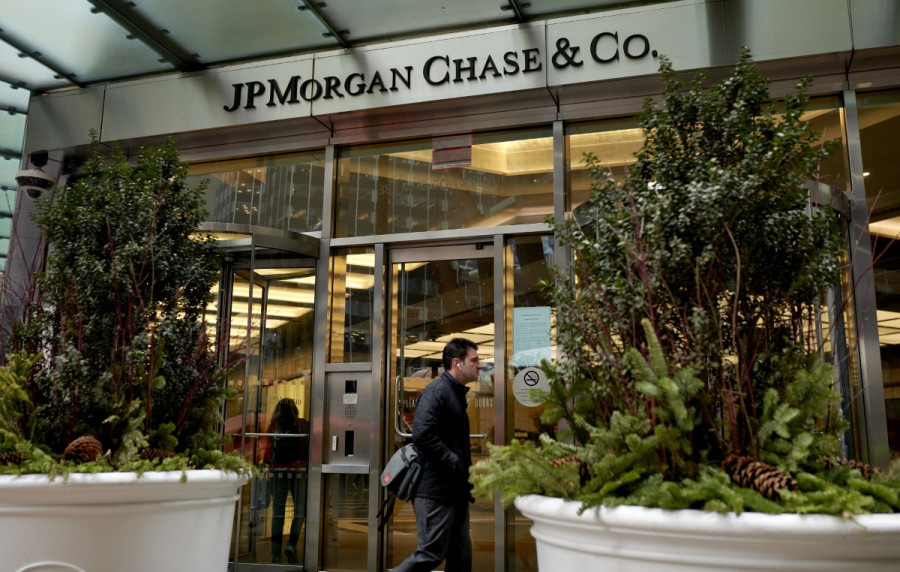
Yesterday, even the usually hawkish economists at JPMorgan Chase & Co. published a new report stating that the Federal Reserve will almost certainly cut interest rates this month. Previously, the bank had believed that policymakers would postpone lowering borrowing costs until January.
A team of experts led by U.S. Chief Economist Michael Feroli said that comments from key Federal Reserve officials — particularly John Williams, President of the Federal Reserve Bank of New York — in support of a short-term rate cut prompted them to revise their outlook.
Such unanimity among forecasts is putting significant pressure on the dollar. Investors, anticipating a decline in yields on dollar-denominated assets, are actively shifting into other currencies and instruments, which naturally leads to lower demand for the U.S. currency. This, in turn, is fueling gains in other assets such as gold and risk-sensitive currencies, which are traditionally viewed as alternatives to the dollar during periods of instability.
However, it is worth remembering that markets often react to expectations rather than events themselves. If the Federal Reserve does in fact cut rates in December as forecast, the negative reaction for the dollar may already be priced in. In that case, we may even see a temporary strengthening of the dollar after the actual announcement.
Moreover, much will depend on the accompanying rhetoric from the Fed. If the regulator indicates in its statement that this rate cut is a one-off move rather than the start of a monetary-easing cycle, the dollar may regain ground. Otherwise, if the Fed hints at further rate cuts in the future, pressure on the dollar will continue.
The Federal Open Market Committee, chaired by Jerome Powell, will hold its meeting in Washington on December 9 and 10. JPMorgan forecasts that the Fed will carry out two quarter-point rate cuts — one next month and another in January 2026.
"Although the upcoming FOMC meeting remains uncertain, we believe that the latest statements from the Federal Reserve tilt the odds toward the Committee deciding to cut rates in two weeks," the bank said.
JPMorgan's updated estimate aligns with the market view of swap traders, who currently price an approximately 80% chance of a quarter-point easing by the Fed next week — a sharp jump from less than 30% just a week earlier.
As for the current technical picture of EUR/USD, buyers now need to think about how to take control of the 1.1625 level. Only this will allow them to aim for a test of 1.1655. From there, it may be possible to climb to 1.1680, but doing so without support from major players will be quite difficult. The most distant target will be the high of 1.1715. In case the instrument declines, I expect significant buying interest only around 1.1590. If no one appears there, it would be advisable to wait for an update of the 1.1560 low or open long positions from 1.1530.
As for the current technical picture of GBP/USD, pound buyers need to capture the nearest resistance at 1.3230. Only this will allow them to aim for 1.3250, above which breaking through will be quite challenging. The most distant target will be the 1.3270 level. If the pair falls, the bears will attempt to regain control of 1.3200. If they succeed, breaking below this range will seriously damage the bulls' positions and push GBP/USD to the 1.3177 low, with the potential to reach 1.3150.
ລິ້ງດ່ວນ



















 ຕິດຕໍ່ພວກເຮົາ