EUR/USD reversed in favor of the US dollar again on Monday and continued to decline on Tuesday toward the 1.1081–1.1086 support level. A rebound from this zone would favor
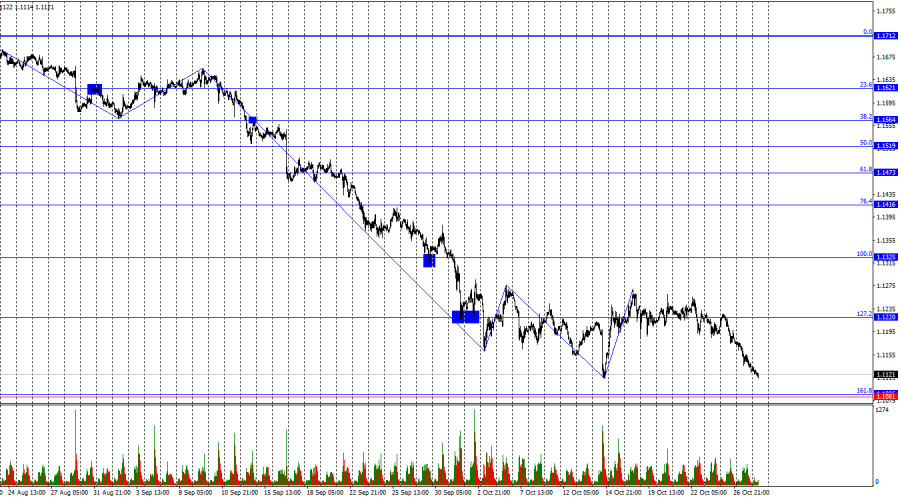
EUR/USD reversed in favor of the US dollar again on Monday and continued to decline on Tuesday toward the 1.1081–1.1086 support level. A rebound from this zone would favor the euro and allow for a modest recovery. However, at present, it is extremely difficult to identify what could halt the euro's decline. Consolidation below the 1.1081–1.1086 level would increase the likelihood of a further decline toward the 200.0% Fibonacci level at 1.0939.
The wave structure on the hourly chart remains bearish. The latest completed upward wave failed to break below the previous low, while the new downward wave has not yet broken below the previous low either. Following the September FOMC meeting, traders expect at least one more monetary policy tightening before the end of the year and another next year. This factor continues to provide substantial support for the US currency, while other factors have so far had little influence. Bearish momentum is also helping the dollar maintain its strength.
The news background on Tuesday was relatively subdued and did not suggest another strong bearish move. However, the dollar's continued appreciation should not come as a surprise. For two consecutive months, the market has focused almost exclusively on the dollar, as though other currencies did not exist. Explanations such as the ECB deciding on a "dovish pause" and the Fed opting for a "hawkish pause" sound unconvincing. Both central banks are inclined toward further monetary policy tightening. A pause is simply a pause, regardless of its characterization. Therefore, the future policy positions of the ECB and the Fed, which have not yet been announced, are unlikely to explain the bears' renewed selling pressure. Many traders are currently paying virtually no attention to Thursday's ECB meeting, as though it were not taking place. Nor is the euro's weakness necessarily attributable to the sluggish EU economy. The EU economy has been growing at a modest pace for years, yet this did not prevent the ECB from raising interest rates during the COVID-19 period or from raising them twice already this year.
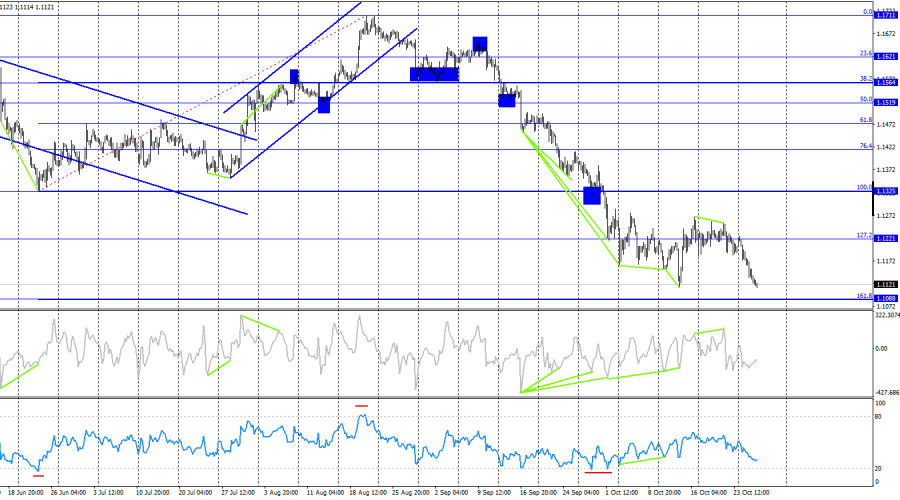
On the four-hour chart, the pair reversed in favor of the US dollar after a bearish divergence formed on the CCI indicator. A new decline toward the 161.8% Fibonacci retracement level at 1.1088 has begun. No new emerging divergences are visible on any of the indicators today. Consolidation above the 127.2% Fibonacci level at 1.1221 would allow traders to anticipate a resumption of the advance toward the 100.0% retracement level at 1.1325.
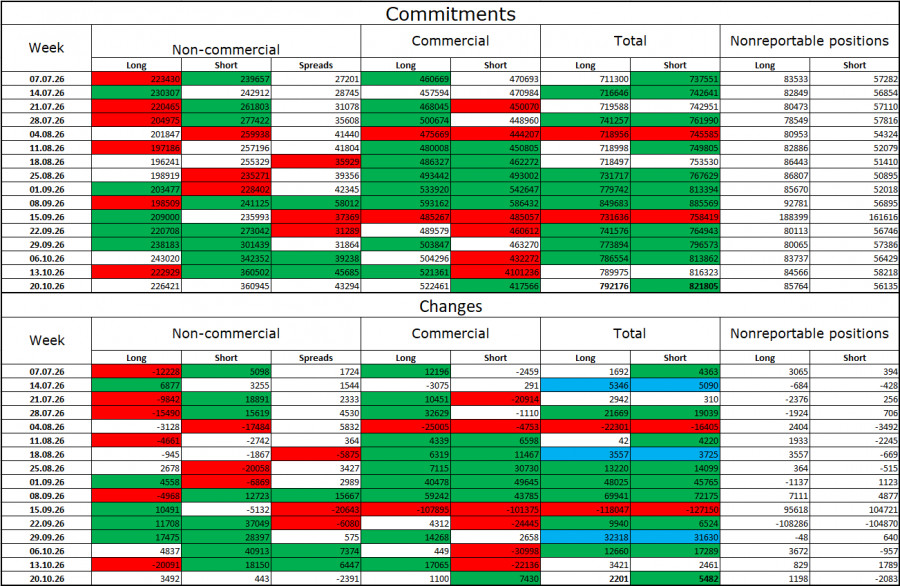
During the latest reporting week, professional traders opened 3,492 Long positions and 443 Short positions. Speculators currently hold a total of 226,000 Long positions and 361,000 Short positions. Bears remain in control, and the euro continues to be sold more frequently than it is bought. This is attributed to the challenging geopolitical situation in the Middle East and Kevin Warsh's efforts to bring inflation down. The market continues to expect inflation to be reduced to 2% by any available means.
Overall, major market participants continue to show considerable interest in the euro over the long term. Events of various kinds around the world, which have been abundant in recent years, inevitably affect investor sentiment and put pressure on risk-sensitive currencies. Moreover, 2026 could set a record for the number of unpredictable events. As a result, traders must continually adapt to changing market conditions.
On October 28, the economic calendar contains three events, with the Fed meeting being the most significant. Economic developments could have a substantial impact on market sentiment on Wednesday evening.
Buying opportunities may arise today if the pair rebounds from the 1.1081–1.1086 level on the hourly chart, with a target of 1.1220. Selling opportunities arose after the pair closed below 1.1220, with the 1.1081–1.1086 support level as the target. These positions can remain open today.
The Fibonacci retracement levels are drawn from 1.1325 to 1.1712 on both the hourly and four-hour charts.

QUICK LINKS









 Contact Us