Ceny ropy ve středu zaznamenaly růst poté, co investoři začali opatrně hodnotit křehké obnovení příměří mezi Íránem a Izraelem. I přes tento růst se ale ceny stále drží poblíž několikatýdenních minim, protože se ukazuje, že globální dodávky ropy zůstávají stabilní a zásoby jsou dostatečné. Obchodníci tak zůstávají opatrní a zohledňují nejen geopolitické napětí, ale i fundamentální tržní faktory, které zatím nenaznačují bezprostřední ohrožení globální energetické rovnováhy.
Futures na ropu Brent vzrostly o 85 centů, což představuje nárůst o 1,3 %, a dosáhly ceny 67,99 USD za barel. Americká lehká ropa WTI posílila o 87 centů, tedy o 1,4 %, na 65,24 USD za barel. Tyto hodnoty ale stále zůstávají relativně nízko. Brent v úterý uzavřela na nejnižší hodnotě od 10. června, zatímco WTI dosáhla nejnižší úrovně od 5. června. To vše v kontextu překvapivého izraelského útoku z 13. června na klíčové íránské vojenské a jaderné cíle, který vystupňoval obavy z rozsáhlého konfliktu v regionu.

Po víkendovém útoku amerických sil na íránská jaderná zařízení se ceny ropy krátkodobě vyšplhaly na pětiměsíční maxima. Šlo o přímou intervenci USA, která vyvolala výraznou reakci trhu kvůli obavám z narušení exportních tras – především v oblasti Hormuzského průlivu. Tento úzký a strategicky významný vodní koridor, kterým denně proudí 18 až 19 milionů barelů ropy, tedy přibližně 20 % celosvětové spotřeby, je pro světový ropný trh zcela zásadní. Jakékoli hrozby narušení přepravy touto cestou mají okamžitý dopad na ceny a náladu investorů.
Americký prezident Donald Trump hrál klíčovou roli při zprostředkování aktuálního příměří, které však trh stále vnímá jako velmi křehké. Obě strany, Írán i Izrael, po 12 dnech intenzivního konfliktu – do kterého se USA zapojily úderem na zařízení na obohacování uranu – vyhlásily příměří a zrušily některá civilní omezení. V následných vyjádřeních se každá z nich snažila prezentovat jako vítěz, přestože bylo zřejmé, že skutečným cílem bylo zabránit další eskalaci.
Analytici z JPMorgan uvedli, že navzdory geopolitickému napětí zůstává základní scénář pro vývoj cen ropy založený na dostatečné globální nabídce. „Globální ceny energií se po obnovení příměří stabilizují,“ uvedli ve zprávě klientům. Jejich výhled zůstává v souladu s fundamentálními faktory, které naznačují, že současná úroveň produkce a zásob dokáže pokrýt poptávku i v případě dočasných výpadků.
Z podobného pohledu se na situaci dívá i David Oxley, hlavní ekonom pro klima a komodity ze společnosti Capital Economics. Podle něj příměří mezi Izraelem a Íránem zůstává nejisté a zranitelné. Pokud ale obě strany nebudou útočit na energetickou infrastrukturu a nenaruší přepravu ropy v Hormuzském průlivu, existuje prostor pro pokračování klesajícího trendu cen. „Pokud nedojde k narušení lodní dopravy, očekáváme, že medvědí fundamenty na ropném trhu budou pokračovat,“ uvedl Oxley.
Kromě geopolitiky sledují investoři také aktuální vývoj amerických zásob ropy a paliv. Ve středu se očekávalo zveřejnění oficiálních vládních údajů, které mají potenciál výrazně ovlivnit krátkodobý sentiment. Podle předběžných dat od Amerického ropného institutu (API) klesly zásoby ropy v USA v týdnu končícím 20. června o 4,23 milionu barelů. Tento pokles může naznačovat vyšší spotřebu nebo zpomalení produkce, což by mohlo podpořit ceny v následujících dnech.
Navzdory pozitivnímu vývoji cen ropy ve středu zůstává nálada na trhu obezřetná. Příměří na Blízkém východě sice přineslo úlevu, ale jeho dlouhodobá udržitelnost je stále nejistá. Klíčová bude reakce trhu na nové informace o amerických zásobách, vývoj vztahů v regionu a především chování hlavních producentů ropy, včetně zemí OPEC+.
Z pohledu širšího makroekonomického rámce pak ceny ropy zůstávají i nadále důležitým faktorem pro inflační očekávání a měnovou politiku. Pokud se podaří udržet stabilitu a ceny zůstanou relativně nízko, mohou centrální banky v čele s americkým Fedem získat větší prostor pro případné snižování úrokových sazeb. To je aspekt, který investoři rovněž pozorně sledují.
The EUR/USD pair remains in a mild corrective pullback that cannot yet be considered complete. Last week saw a number of important events, but it is hard to say they had a strong impact on trader sentiment or on the pair's movement. The key takeaway from the news flow at the end of April was the ECB's readiness to raise interest rates if inflation continues to accelerate, contrasted with the FOMC's reluctance to take similar action. This provided bulls with another supportive factor, although they were not lacking such support before.
However, on Monday it was reported that Iran attacked a U.S. destroyer in the Persian Gulf near the Strait of Hormuz. Washington quickly stated that the ship had not been sunk, but where the missiles struck—or whether they hit the U.S. Navy vessel at all—remains unclear. Shortly afterward, tensions in the Middle East escalated further, as Iran launched missiles at one of the U.S.'s allies, the UAE, for the first time in over a month. Local reports indicated that a refinery in Fujairah was hit, though there has been no official confirmation or denial. Something is clearly happening in the Middle East, but traders are left to speculate—and the market is no longer willing to rely on speculation. Despite escalation, bears are not rushing to sell, and despite ongoing negotiations, bulls are not eager to buy.
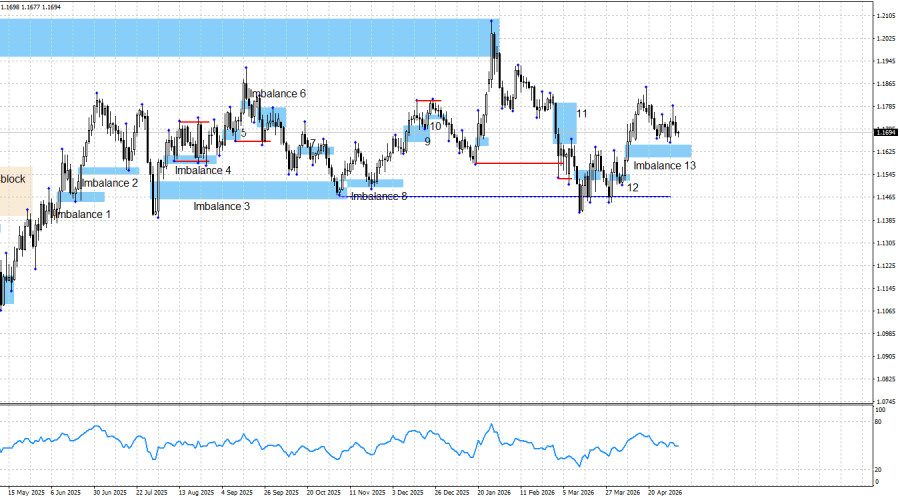
In the current situation, traders are waiting either for a reaction from imbalance 13 or for the formation of new bullish patterns. I continue to view the trend as bullish. Last week, bulls came very close to testing imbalance 13 and generating a signal. Notably, there are no bearish patterns at present, leaving little justification for selling the pair. The last buy signal from imbalance 12 worked well, with the euro gaining approximately 270 points.
It is worth emphasizing again that the U.S. dollar's rally from January to March was driven entirely by geopolitics. As soon as the United States and Iran agreed to a ceasefire, bears retreated and bulls moved aggressively higher. At present, the truce remains fragile but is still in place. I have repeatedly stated that I do not believe the bullish trend has ended, despite the break of key structural lows and the conflict in Iran. The price movement over the past three months could turn into a bearish trend if geopolitical conditions continue to deteriorate. However, markets often price in the worst-case scenario in advance. Therefore, it is possible that traders have already fully priced in the Middle East conflict. For now, bulls lack positive catalysts for further gains, while bears lack negative drivers to push the market lower.
The overall technical picture is clear. The bullish trend remains intact but requires additional support. This week, such support may come from U.S. data on employment, unemployment, job openings, and ISM business activity, as well as from geopolitical developments. As we have seen, Monday began with renewed attacks in the Middle East, but by Tuesday it became clear that a full-scale escalation has not yet occurred.
There was no significant news flow on Tuesday. In the coming hours, ISM and JOLTS reports are due in the United States. The ISM Services PMI is expected to decline slightly, but the market's reaction—or lack thereof—will depend on the actual figure. According to forecasts, JOLTS job openings for March are expected to decline further. Three years ago, the U.S. consistently reported around 10 million job openings per month; over the past year, the figure has remained below 7 million.
There are still many reasons for bulls to push higher in 2026, and even the outbreak of conflict in the Middle East has not reduced them. Structurally and globally, Trump's policies—which contributed to a significant decline in the dollar last year—have not changed. In the coming months, the U.S. dollar may occasionally strengthen due to risk aversion, but this would require continued escalation in the Middle East. I still do not believe in a sustained bearish trend for EUR/USD. The dollar has received temporary support, but what long-term drivers do bears have?
Economic Calendar (U.S. and Eurozone):
U.S.: ADP Employment Change (12:15 UTC)
On May 6, the economic calendar includes only one release, which cannot be considered significant. As a result, the impact of the news flow on market sentiment on Wednesday is expected to be limited.
EUR/USD Forecast and Trading Advice:
In my view, the pair remains in the process of forming a bullish trend. The news backdrop changed sharply two months ago, but the trend itself cannot be considered invalidated or completed. Therefore, bulls may well continue their advance in the near term, provided that geopolitics does not suddenly shift toward renewed escalation.
Traders previously had the opportunity to open long positions based on the signal from imbalance 12, and the upward movement could extend toward the yearly highs. Imbalance 13 has also formed and may provide a new bullish signal in the near future. For uninterrupted growth of the euro, the Middle East conflict would need to move toward a stable peace—something that is not currently evident. Bulls still lack sufficient support but may gain it over the course of the week.
PAUTAN SEGERA

















 Hubungi Kami