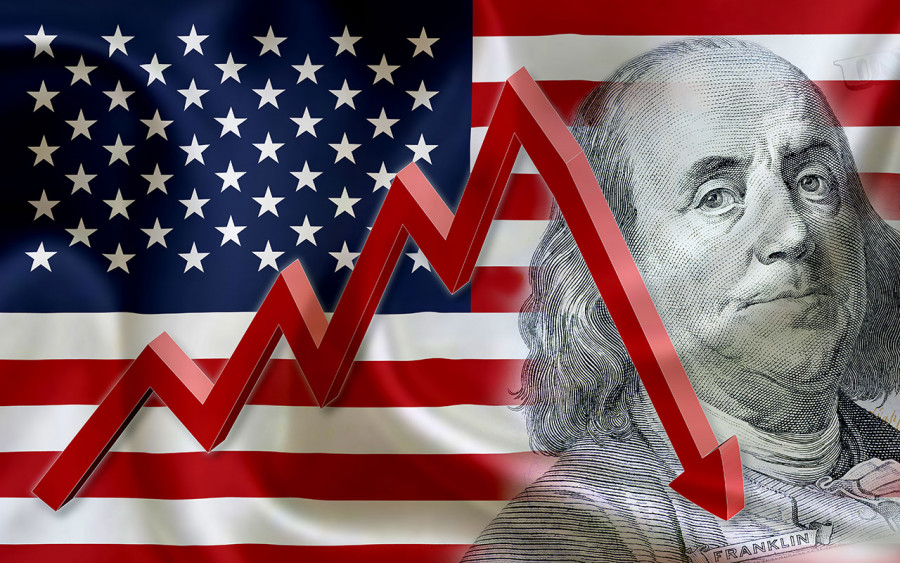
Despite Chinese exports to the United States falling by 20% in 2025, exports to other countries grew. And Beijing is not only coming out the winner in the confrontation with the US — it is conquering new markets, understanding that Washington will continue to put "sticks in the wheels." Europe is also beginning to sound the alarm, realizing the dire state of its own industry. Interestingly, in Brussels, they see the problem as low domestic demand in China and call for measures to stimulate it. In other words, Europe believes that China is deliberately selling its products abroad instead of boosting domestic demand.
At the same time, China has reported that export restrictions by trade partners on high-tech products hinder the growth of Chinese imports. In other words, Beijing would gladly buy technologies and high-tech goods worth hundreds of millions of dollars if it were not for partners' restrictions. Thus, imports into China are simply being blocked, while exports from China grow because there are virtually no restrictions.
It should also be recalled that there is a one-year trade truce (deal) between China and the US. Once again, I note that I consider it temporary in every sense. The deal could collapse soon if Trump seriously intends to impose tariffs on countries with trade ties to Iran. And China buys a large portion of Iranian oil. If Washington raises tariffs on Iran's business partners by 25%, a new trade war between China and the US could begin — or the old one could resume. Take your pick.
Beijing has already stated that it will not reduce trade volumes with Iran simply because Donald Trump demands it. If the US president wants a new trade war, he will get one. China will continue to act in accordance with its own needs and interests and does not intend to bow to America. Retaliatory steps in the event of another escalation will follow without delay.
Analysts, in turn, note the fragility of the trade truce between Washington and Beijing, suggesting the trade deal will collapse at the first opportunity. I will also note that, unlike many other countries, China has the means to respond. Beijing can impose new export restrictions on rare earth metals, or retaliate with sanctions against American companies that sell weapons to Taiwan. However, the question of tariffs remains open, as the US Supreme Court is soon to issue a verdict on whether most of these tariffs were lawful.
Based on the EUR/USD analysis, I conclude that the instrument continues to build an upward trend segment. Donald Trump's policy and the Fed's monetary policy remain significant factors for the long-term decline of the US currency. Targets of the current trend segment may extend to the 25-figure range. The current upward wave sequence appears to be nearing completion, so a near-term decline is expected. The trend segment that began on November 5 may still take a five-wave form, but for now, it is, in any case, a corrective wave.
The wave picture of GBP/USD has changed. The downward corrective structure a-b-c-d-e in C of wave 4 appears complete, as does wave 4 as a whole. If this is indeed the case, I expect the main trend segment to resume its development with initial targets around the 38 and 40 figures.
In the short term, I expected wave 3 or c to form, with targets near 1.3280 and 1.3360, which correspond to the 76.4% and 61.8% Fibonacci levels. These targets have been reached. Wave 3 or C has presumably completed its development, so in the near future, a downward wave or a set of waves may form.
SZYBKIE LINKI



















 Skontaktuj się z ForexMart