It is difficult to fight the USD/JPY rally if it is driven by dollar strength amid the conflict in the Middle East. However, growing investor confidence in reaching a peace agreement has deprived the greenback of its main advantage. Nevertheless, the Japanese government is now facing another problem—a weak yen. Like the U.S. currency, it is considered a safe-haven asset. At the same time, the rally in the S&P 500 and the BoJ's reluctance to raise rates are pushing the pair higher.
About 38% of experts surveyed by Reuters named April as the month for the next increase in the overnight rate from 0.75% to 1%, while 35% preferred July. However, the Bank of Japan usually signals upcoming monetary tightening ahead of the next Board meeting.
This time, Kazuo Ueda did not provide such signals. The central bank governor spoke about two-sided risks stemming from the Middle East conflict. On one hand, the chances of rising inflation are increasing; on the other, the risk of slower economic growth is also rising. Making a decision in such conditions becomes extremely difficult. The best option is to wait and observe.
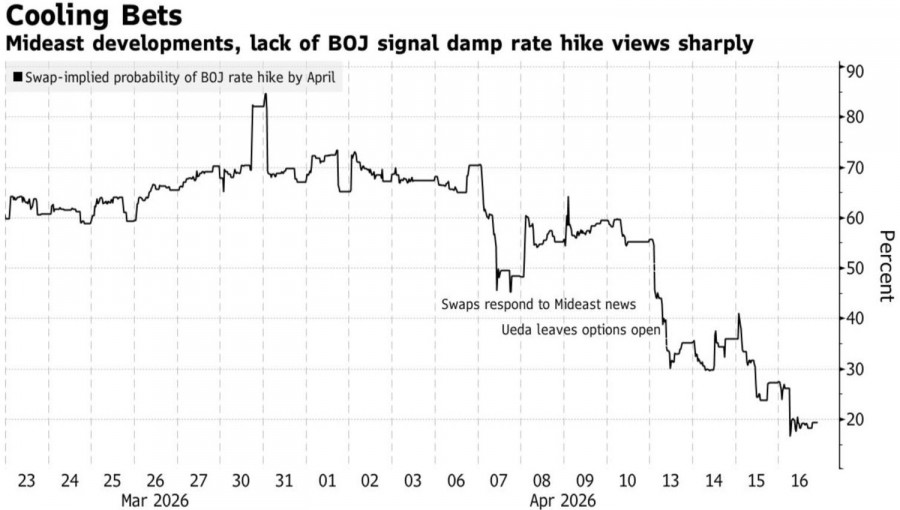
Dynamics of the Chances for a BoJ Overnight Rate Hike in April
After this rather "hawkish" speech by Kazuo Ueda, the futures market reduced the probability of monetary tightening in April from 55% to 19%, which put pressure on the yen.
Yen supporters were also unsettled by remarks from Satsuki Katayama. The finance minister stated that the Japanese government is ready to take decisive measures against forex speculators. These actions would be carried out in coordination with the United States. Allegedly, currency interventions were agreed upon with Scott Bessent following a personal meeting.
Dynamics of USD/JPY and Currency Interventions by Japan
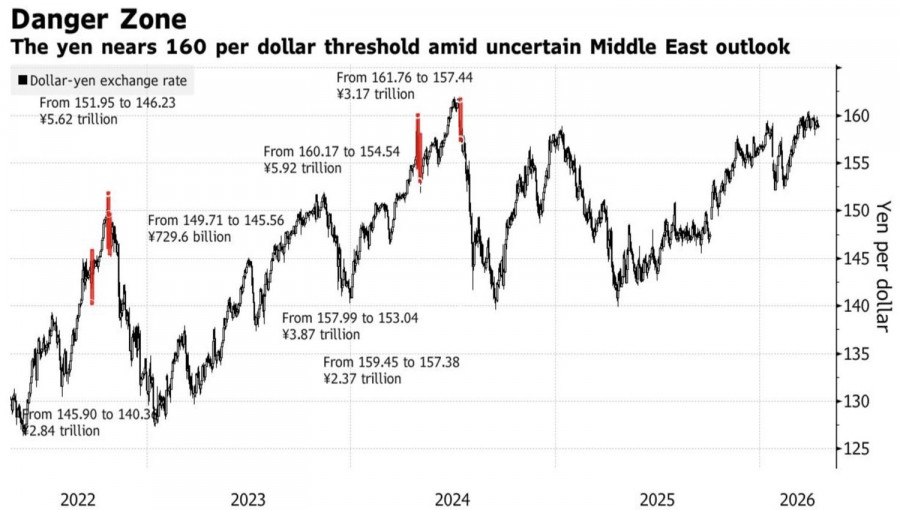
Coordinated intervention in the currency market, similar to the 1985 Plaza Accord, would be far more effective than the unilateral actions previously taken by Tokyo. However, it is worth noting that those past interventions were also successful. The upward trend in USD/JPY was reversed in both 2022 and 2024, when Japan chose favorable moments—specifically when the U.S. dollar was weakening against major global currencies.
Something similar may be happening now. The de-escalation of the geopolitical conflict in the Middle East is depriving the dollar of its main advantage—strong demand for safe-haven assets. As a result, other global currencies are returning to their pre-conflict levels. The yen, however, is not yet able to do so, as it is itself considered a safe-haven asset. Additionally, the BoJ has made it clear that it will not tighten monetary policy in the near future.
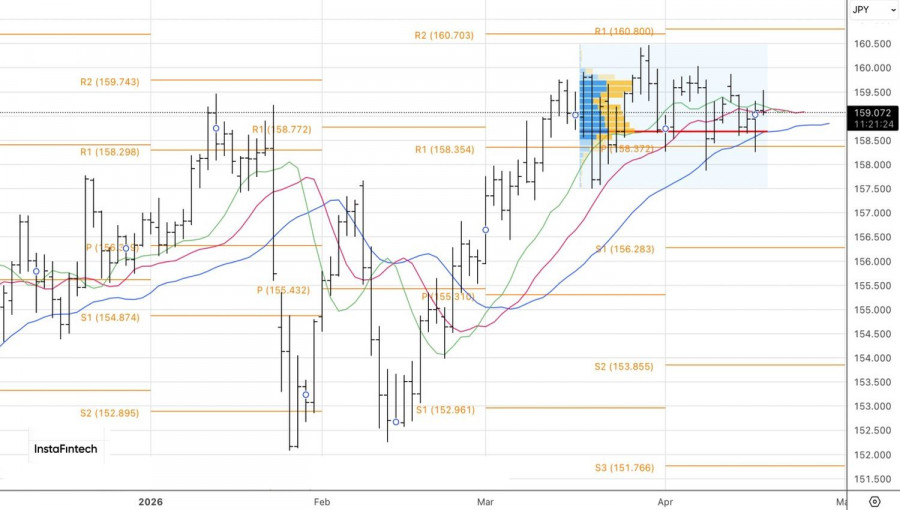
From a technical perspective, the daily USD/JPY chart shows two opposing pin bars with long wicks and an ineffectively played inside bar—clear signs of consolidation. It makes sense to consider buying above 159.5, and selling in case of a break below the fair value level at 158.7.

SZYBKIE LINKI




















 Skontaktuj się z ForexMart