The eurozone Composite PMI fell to 51.9 in October from 53.1 the previous month, reaching a four-month low. The Manufacturing PMI eased to 52.4 from 52.9, while the Services
The eurozone Composite PMI fell to 51.9 in October from 53.1 the previous month, reaching a four-month low. The Manufacturing PMI eased to 52.4 from 52.9, while the Services PMI declined to 51.7 from 53.0. In formal terms, the eurozone economy continues to expand, but growth is slowing, with both sectors weakening in pairs. Softening demand and business caution are becoming increasingly evident. For the ECB, this signals that its hawkish policy is beginning to affect real economic activity, although the central bank still prefers to focus on inflation.
Germany's ZEW Economic Sentiment Index fell to 28.1 in October from 34.7 in September, marking its first deterioration in six months. Analysts had expected a more moderate decline to 30. Private consumption and investment remain weak, while assessments of the current situation improved: the indicator rose from -47.1 to -35.9, exceeding forecasts. This divergence suggests that Germany's economy still appears relatively strong at present, but the outlook is becoming increasingly concerning. Expectations for the eurozone as a whole also deteriorated, with the indicator falling by 7.3 points to 18.5.
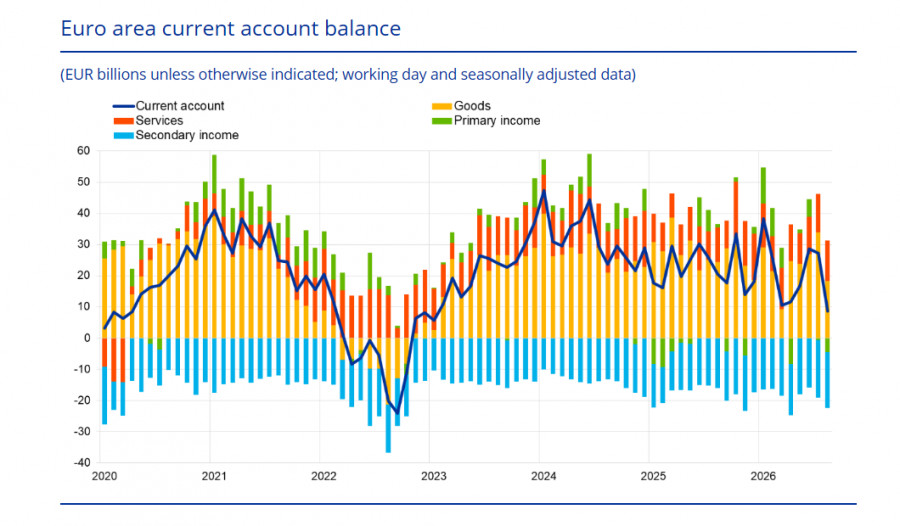
ECB data published on October 20 showed that the eurozone's current account surplus stood at just €9 billion in August, compared with €27 billion the previous month. The €18 billion decline in a single month was sharp and significant. It was driven primarily by a reduction in the goods surplus, a direct consequence of the energy shock. Europe is paying more for energy imports, and this is reflected in its trade balance.
For the euro, this is a structural bearish factor, as the current account is one of the currency's fundamental drivers. Its weakening means that capital inflows into the eurozone are declining while outflows are increasing. The energy shock is no longer merely a price factor; it is becoming a structural blow to the balance of payments.
The ECB meeting will take place on October 29, just seven weeks after the September rate hike to 2.50%. The consensus is almost unanimous: rates will remain unchanged. There are compelling reasons for a pause in October, including the absence of second-round effects, tighter financial conditions due to market interest rates and credit spreads, and falling equity markets.
Lagarde will likely use the press conference to signal the possibility of a December rate hike, unless there are "particularly favorable" developments in price dynamics. She has an argument to support this position: the energy shock is "too large and persistent for monetary policy to ignore." However, markets are already pricing in a December hike. This means that if the ECB does raise rates, the move will not come as a surprise and is already being partially reflected in the euro's exchange rate. If neither central bank takes action in October, the interest rate differential between the Fed and the ECB will remain unchanged, suggesting that significant price movements are unlikely, let alone a reversal of the long-term trend.
Meanwhile, the gas situation has become critical. On Monday, November TTF futures rose to their highest level since December 2022. According to Gas Infrastructure Europe, EU gas storage facilities are 74.6% full, compared with the five-year average of 89.5% for this time of year. In Germany, storage levels are just 61.5%, versus an average of 88.3%. This poses a direct threat to German industrial activity, which could slow during the winter amid a physical shortage of energy supplies.
For the euro, this is a direct negative. High energy prices weigh on real incomes, intensify inflationary pressures, and force the ECB to maintain a restrictive policy stance, even at the cost of slower economic growth.
The net short position in the euro narrowed slightly during the reporting week to -€18.8 billion. The estimated price lost momentum but remains below its long-term average.
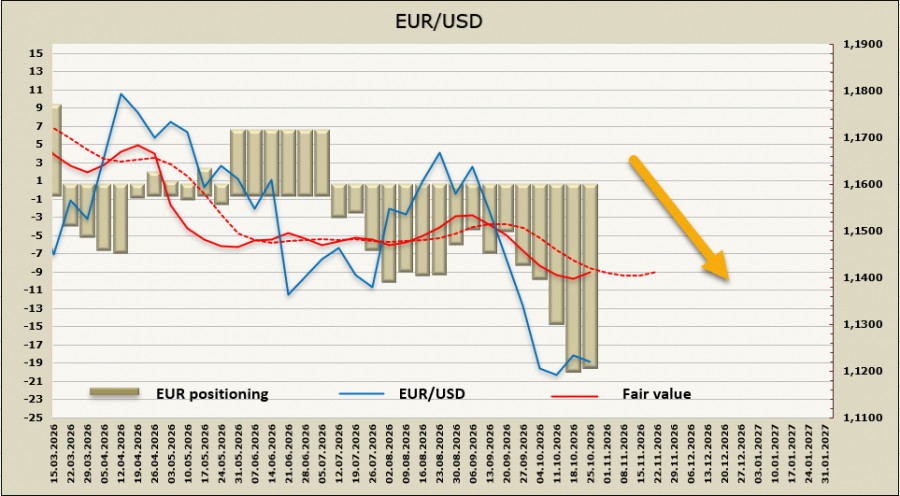
The euro failed to capitalize on the pause in bullish sentiment toward the US dollar and develop a sustained corrective move. The expectation is that the local high at 1.1270 will not be surpassed and that EUR/USD will resume its decline toward 1.1066.
LINKS RÁPIDOS









 Contate-nos