The dollar rose sharply after the employment report, despite easing tensions in the Middle East.
The sharp increase of 170,000 in employed people in the U.S. non-farm sector led to a strengthening of the dollar and a decline in risk assets. The employment report showed that the U.S. economy created far more jobs than expected, fueling expectations of further interest rate hikes by the Federal Reserve. Amid growing forecasts of a tightening of monetary policy, the US dollar strengthened against a basket of major currencies.
The European currency and the British pound, closely tied to overall market sentiment toward risk assets, have experienced the most negative impact from the positive shift in the U.S.
In the first half of today, data on the change in factory orders in Germany and the Sentix investor confidence indicator for the Eurozone will be released. These macroeconomic reports are crucial for understanding the current state and prospects of the German economy. Special attention will be paid to German orders, as their dynamics are among the leading indicators of future manufacturing activity. A decline in this indicator could significantly impact GDP expectations for Germany and, consequently, for the Eurozone as a whole. Weak results will serve as a negative signal, confirming the industrial sector's weakness.
The Sentix indicator, in turn, reflects the sentiments of institutional and retail investors regarding the current and expected situation in the Eurozone. A high confidence level traditionally correlates with capital inflows and higher asset valuations, while a decline in the indicator, as expected, may signal rising risks and investors' readiness to reduce their appetite for riskier assets.
As for the pound, there are no data from the UK today, so there will be few reasons for the GBP/USD pair to recover. The absence of new economic data means that the pair will be influenced primarily by external factors, particularly the actions of the U.S. Federal Reserve. Any statements or hints of further Fed rate hikes could exert significant pressure on the pound, causing it to decline against the dollar. The lack of positive internal news from the UK in recent days only exacerbates the situation.
If the data align with economists' expectations, it would be best to act on the Mean Reversion strategy. If the data turns out to be significantly higher or lower than economists' expectations, the Momentum strategy will be optimal.
Buy on a breakout of level 1.1535 may lead to the euro rising to the area of 1.1560 and 1.1580;
Sell on a breakout of level 1.1510 may lead to the euro falling to the area of 1.1480 and 1.1448;
Buy on a breakout of level 1.3345 may lead to the pound rising to the area of 1.3375 and 1.3407;
Sell on a breakout of level 1.3317 may lead to the pound falling to the area of 1.3290 and 1.3256;
Buy on a breakout of level 160.43 may lead to the dollar rising to the area of 160.72 and 160.91;
Sell on a breakout of level 160.24 may lead to dollar losses in the area of 160.02 and 159.83;
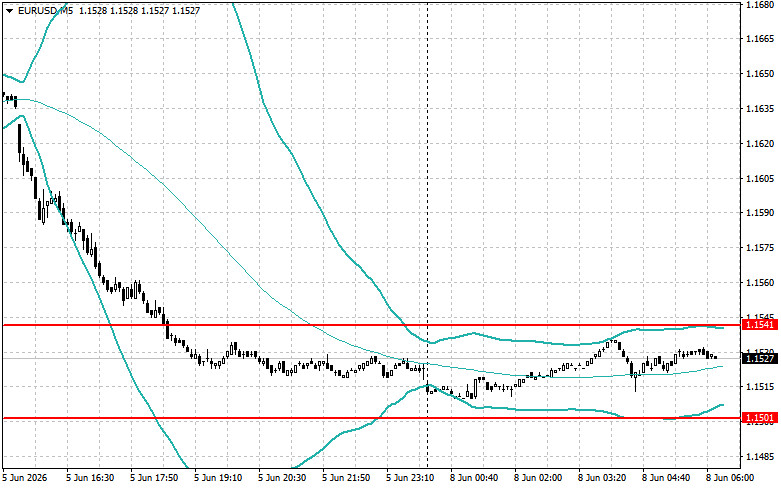
I will look for short positions after a failed breakout above 1.1541 on a return below this level;
I will look for long positions after a failed breakout above 1.1501 on a return to this level;
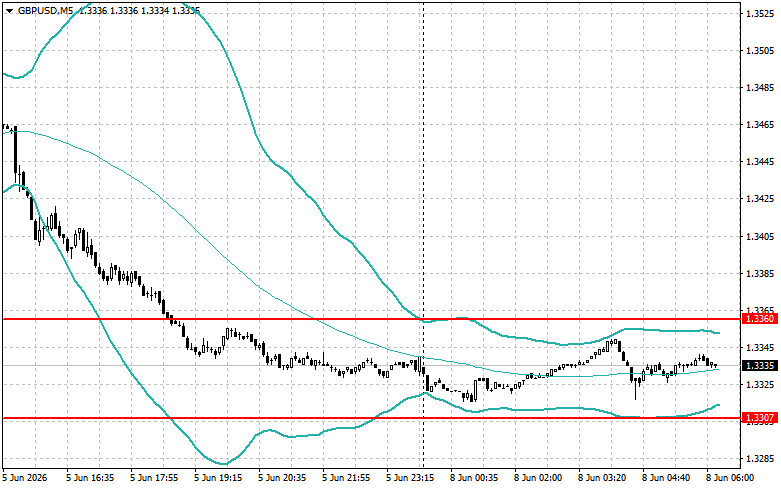
I will look for shorts after a failed breakout above 1.3360 on a return below this level;
I will look for longs after a failed breakout above 1.3307 on a return to this level;
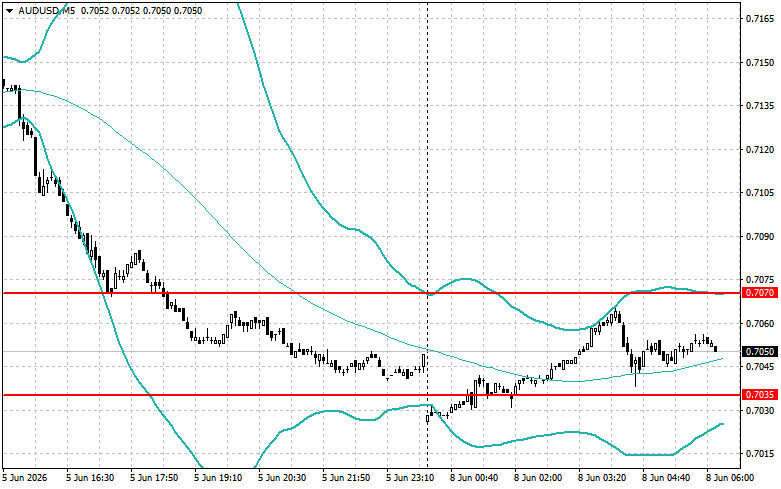
I will look for shorts after a failed breakout above 0.7070 on a return below this level;
I will look for longs after a failed breakout above 0.7035 on a return to this level;
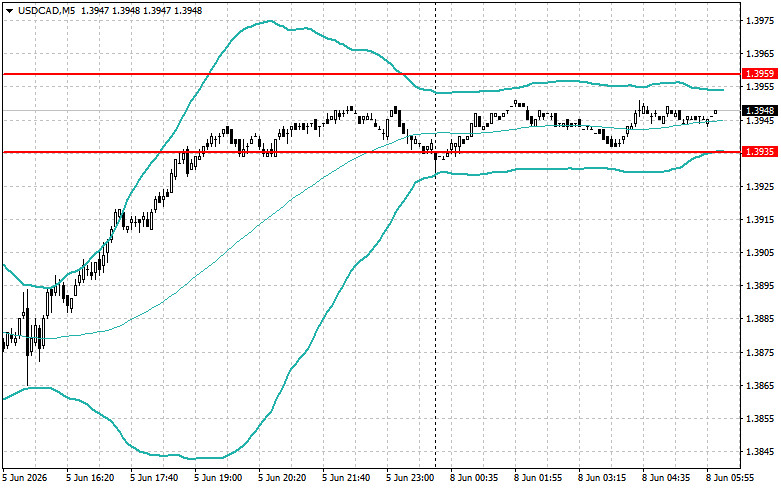
I will look for shorts after a failed breakout above 1.3959 on a return below this level;
I will look for longs after a failed breakout above 1.3935 on a return to this level;
HIZLI BAĞLANTILAR
show error
Unable to load the requested language file: language/turkish/cookies_lang.php
date: 2026-06-08 02:06:51 IP: 172.18.0.1

















 Bize Ulaşın