Čínská výrobní aktivita se v červenci zhoršila, protože růst nových zakázek zpomalil poté, co výrobci omezili výrobu kvůli nejistotě ohledně amerických cel na čínský export, ukázal průzkum soukromého sektoru zveřejněný v pátek.
Index nákupních manažerů Caixin/S&P Global klesl v červenci na 49,5 z 50,4 v předchozím měsíci.
Tento ukazatel klesl pod hranici 50, která odděluje expanzi od kontrakce, a nedosáhl hodnoty 50,4, kterou očekávali analytici oslovení agenturou Reuters.
Jingyi Pan, ekonomická ředitelka S&P Global Market Intelligence, poznamenala, že „výroba ve zpracovatelském průmyslu poklesla teprve podruhé od října 2023“.
„Zatímco úspěšné snahy o rozvoj podnikání na domácím trhu dokázaly udržet vyšší příliv nových zakázek, celkový růst tržeb byl jen nepatrný, protože poptávka ze zahraničí zůstala utlumená v důsledku nejistoty v globálním obchodě,“ poznamenala.
Pan dodala, že společnosti také snížily své prodejní ceny v důsledku rostoucích vstupních nákladů.
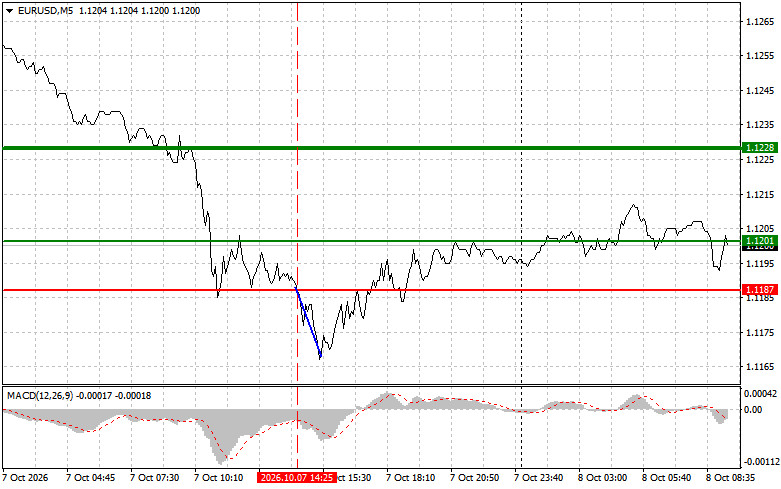
The test of 1.1187 came as the MACD indicator began to move down from the zero line, confirming a good entry point to sell the euro. As a result, the pair fell about 20 pips.
In the afternoon, the Federal Reserve minutes did not deliver a shock but rather confirmed the already known picture — and that is the key point. The September minutes brought no surprises: all 19 participants supported the rate hike to 3.75–4.00%, and a majority expect one more hike before year-end. For the eurozone, such Fed firmness creates a dilemma because the European Central Bank, with a deposit rate of 2.50%, must act against the backdrop of weak consumers and 3.8% inflation.
Today the euro has no domestic catalysts, so the ECB account is in the spotlight. Together with Germany's trade-balance data and the Eurogroup meeting, it forms the first-half calendar. But trade stats rarely change a currency's course, and finance-ministers' meetings usually deliver general statements. Market focus will therefore shift to what ECB policymakers say about next steps.
Contrast with yesterday evening is notable. The Fed minutes showed unanimity and confidence that inflation risks are tilted upward. At the same time, the ECB must balance 3.8% inflation against weak consumption (eurozone retail rose just 0.1% in August). A hawkish ECB account would give the euro a chance to recover some ground because the market would see the gap between central banks narrowing. The tone needs to be decisive given the currency's recent drop to a May-2025 low.
For intraday strategy, I will rely mainly on Scenario 1 and Scenario 2 below.
Scenario 1: Buy the euro today if the price reaches around 1.1211 (green line), targeting 1.1238. Plan to exit at 1.1238 and sell on a reversal, expecting 30–35 pips from the entry. Expect euro strength only after strong data. Important: before buying, ensure MACD is above zero and only beginning to rise.
Scenario 2: Also buy if there are two consecutive tests of 1.1191 while MACD is in the oversold area. This would limit downside potential and trigger an upward reversal. Expect moves toward 1.1211 and 1.1238.
Scenario 1: Sell the euro after it reaches 1.1191 (red line). Target 1.1167, where I plan to exit and immediately buy the reverse, expecting a 20–25 pip countermove. Pressure will return on weak data. Important: before selling, ensure MACD is below zero and only beginning to fall.
Scenario 2: Also sell if there are two consecutive tests of 1.1211 while MACD is in the overbought area. This would cap upside and trigger a downward reversal. Expect declines to 1.1191 and 1.1167.
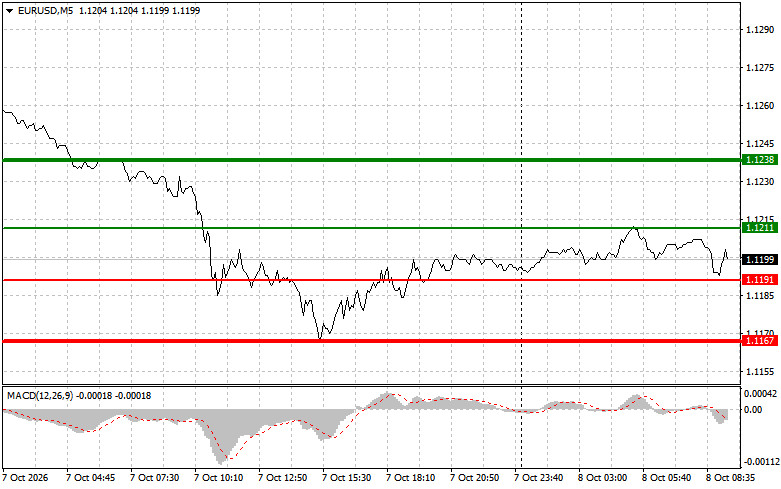
Thin green line – entry price at which you can buy the trading instrument.
Thick green line – approximate price where you can place Take Profit or manually lock in profits, since further upside above this level is unlikely.
Thin red line – entry price at which you can sell the trading instrument.
Thick red line – approximate price where you can place Take Profit or manually lock in profits, since further downside below this level is unlikely.
MACD indicator. When entering the market, it is important to follow the overbought and oversold zones.
Important. Beginner traders in the Forex market must be very cautious when making entry decisions. It is best to stay out of the market before the release of important fundamental reports to avoid getting caught in sharp price swings. If you decide to trade during news releases, always place stop orders to minimize losses. Without stop orders,, you can quickly lose your entire deposit, especially if you don't use money management and trade large volumes.
Remember that successful trading requires a clear trading plan, like the example above. Spontaneous trading decisions based on the current market situation are inherently a losing strategy for an intraday trader.
HIZLI BAĞLANTILAR
show error
Unable to load the requested language file: language/turkish/cookies_lang.php
date: 2026-10-08 09:42:56 IP: 172.18.0.1

















 Bize Ulaşın