
Global financial markets are currently undergoing a significant revaluation. The main cause of these large shifts has been news about the US's continued military actions against Iran. This geopolitical conflict has served as a trigger, setting off a chain reaction across key assets. The situation becomes even more complex as the external shock coincides with unexpectedly strong economic indicators in the United States.
The US currency is now the main beneficiary of the crisis. The DXY index, which measures the strength of the dollar against other currencies, has made a powerful leap to 100.24. This represents the best daily growth since the second half of March. Investors always buy dollars when the world is unsettled, but now this trend has a solid economic foundation.
Data from the US shows that the economy is doing well. The number of people filing for initial unemployment benefits dropped to 202,000—substantially lower than expected and below the previous week's level (215,000). At the same time, manufacturing continues to grow; the manufacturing activity index for March rose to 52.7. However, behind this positivity lies an important nuance: the prices that producers are paying have spiked sharply. For the financial market, this means one thing: inflation is not going away. Consequently, the US Federal Reserve will not rush to lower interest rates, making the dollar even more attractive for capital preservation.
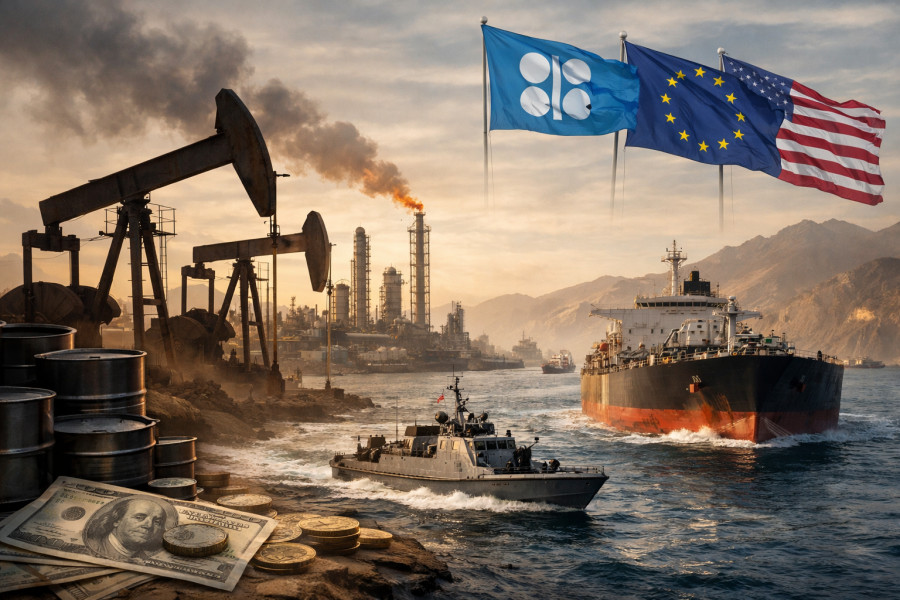
The energy market reacted first and very vigorously to the conflict. Brent oil prices soared to $109 per barrel, and WTI surpassed $112. Investors are seriously fearing supply disruptions through the Strait of Hormuz.
The International Energy Agency has already warned that any disruption to logistics will hit the European economy quite soon— the effects will be felt as early as April. The market's hope now rests on oil-exporting countries. At the upcoming OPEC+ meeting on Sunday, it is expected that there will be discussions about the possibility of increasing production to mitigate the price shock and compensate for potential supply issues.
US stock exchanges reacted to the news by stepping away from risk. Futures on major indices are declining, while the volatility index VIX, often referred to as the "fear index," has surged to 27.54. Investors are concerned that high oil prices will drive inflation and hurt corporate profits.
However, the market situation is heterogeneous. Shares of oil giants such as ExxonMobil and Chevron are rising alongside raw-material prices. Conversely, transportation and airline companies are facing losses due to high oil prices, which are driving up fuel costs. The space industry deserves a special mention, having received localized support from news that SpaceX has confidentially filed for an IPO.
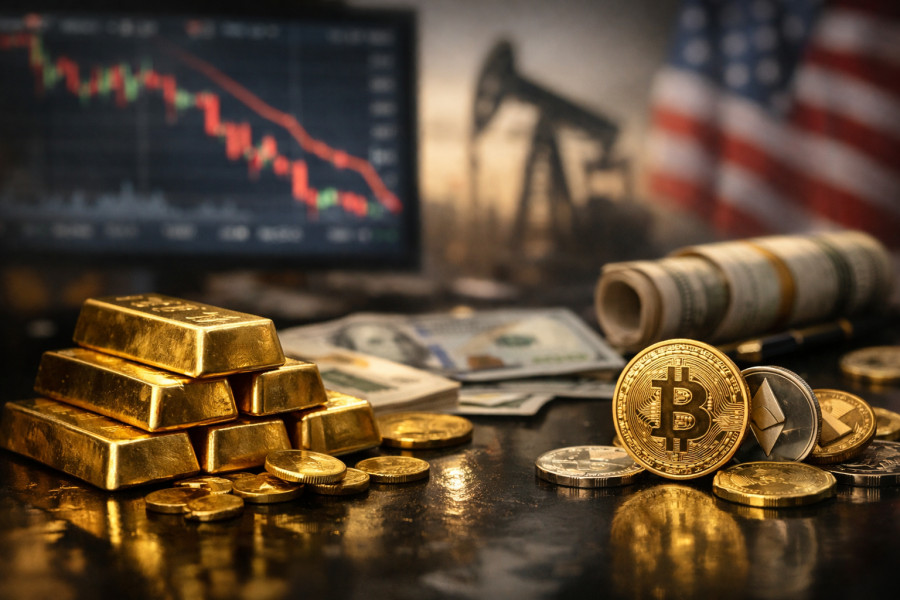
Gold has behaved unexpectedly. The spot price of this precious metal fell by about 3% to $4,612 per ounce. Typically, gold increases during conflicts, but this time a different logic has applied. The spike in oil prices reduced the chances that the Fed would cut rates in December. As a result, yields on US government bonds rose. Since gold itself does not generate interest income, it became more profitable for investors to hold cash in a strong dollar and in yielding bonds.
The cryptocurrency market, in turn, is following the stock market. Bitcoin has fallen to $66,000–67,000, pulling down Ethereum, XRP, and other coins along with it. Current overall economic fears have proven far more important than any internal news from the crypto industry. The decline in Bitcoin has also negatively impacted shares of related companies, such as MicroStrategy and Coinbase.
Today's market picture is defined by two key factors that are closely interrelated. The first is the escalation surrounding Iran. It drives up oil prices, weighs on stocks and cryptocurrencies, and strengthens the dollar.
The second factor is the robust US economy. Strong reports and rising production costs convince investors that borrowing in America will remain expensive. The combination of high rates, a strong dollar, and expensive oil creates the current tough environment in which gold, cryptocurrencies, and most stocks lose their appeal.
SZYBKIE LINKI




















 Skontaktuj się z ForexMart