Akcie společnosti Inovio Pharmaceuticals Inc (NASDAQ:INO) prudce klesly o 14 % poté, co společnost oznámila plány na upsanou veřejnou nabídku svých kmenových akcií a warrantů.
Biotechnologická společnost se sídlem v Plymouth Meeting v Pensylvánii uvedla, že má v úmyslu nabídnout akcie svých kmenových akcií nebo předfinancované opční listy na nákup kmenových akcií spolu s doprovodnými opčními listy série A a série B. Všechny cenné papíry v navrhované nabídce budou prodány společností Inovio.
Jediným manažerem nabídky je společnost Piper Sandler & Co. Inovio plánuje poskytnout upisovateli 30denní opci na nákup dalších akcií a/nebo doprovodných warrantů v množství až do výše 15 % cenných papírů nabízených za stejných podmínek.
Společnost upozornila, že navrhovaná nabídka podléhá tržním podmínkám a není zaručeno, že bude dokončena v plánovaném termínu ani za konečných podmínek.
Veřejné nabídky dalších akcií obvykle vyvíjejí tlak na pokles ceny akcií společnosti, protože signalizují potenciální zředění podílů stávajících akcionářů. Investoři často reagují na takové oznámení negativně, zejména pokud společnost vydává jak akcie, tak opční listy, které mohou v případě uplatnění vést k dalšímu zředění.
Společnost Inovio ve svém oznámení neuvedla, jak plánuje výnosy z nabídky použít.
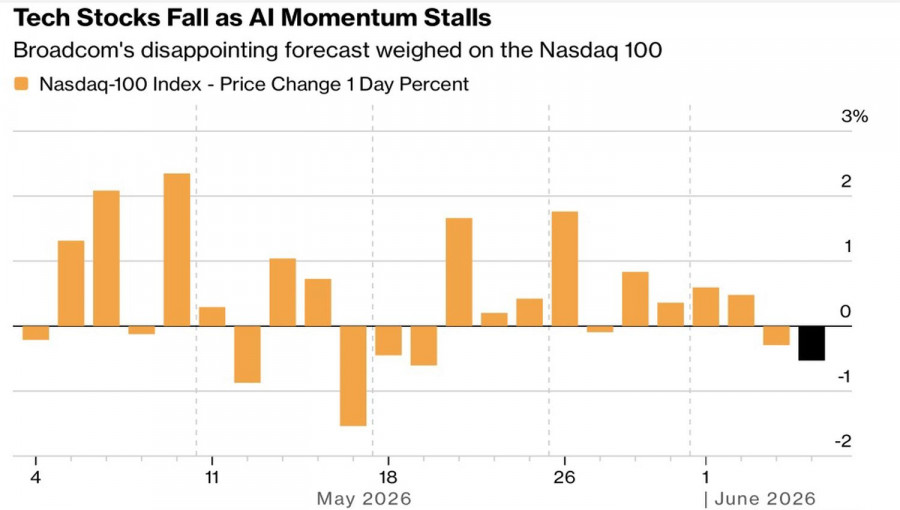
Appetite comes with eating. Although Broadcom met its own revenue guide of $100bn, investors wanted more. The stock plunged by about 13%, and the market cap fell by roughly $286bn, notching one of the largest single-day market-cap losses in US equity history. Yet the tech giant's setback did not derail the broader market: roughly 360 S&P 500 constituents closed in the green, allowing the index to finish higher.
A single falling domino can topple the whole structure. Investors had been obsessed with chipmakers, buying them like hotcakes. Talk of an AI bubble was widespread and a trigger was needed for profit-taking. Broadcom's quarterly guide may or may not have been that trigger, but the company's decline hit the entire tech sector.
Nasdaq 100 performance
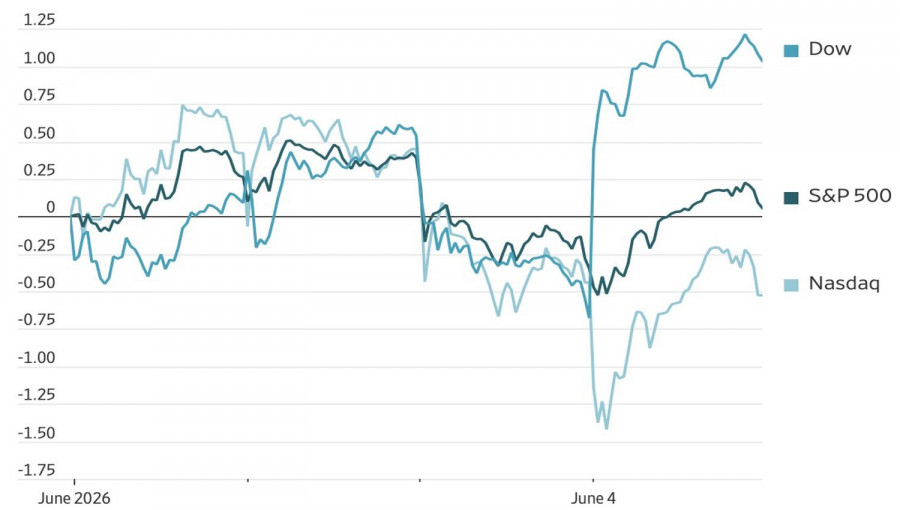
As a result, the Nasdaq 100 closed in the red, while investors seeking shelter from mega-cap tech rotated into other assets, producing mixed moves across US indices. The Dow Jones notched a fresh record, and the S&P 500 managed to close the downside opening gap and finish higher.
Financial stocks emerged as the main refuge. Only 15% of respondents in the MLIV Pulse survey expect the fed funds rate to fall from current levels. Most foresee either a hold at 3.75% or further increases, which creates a tailwind for banks.
Dynamics of US stock indices
US labor market data for May is eagerly awaited. Positive payrolls would be bad news for the S&P 500 — stronger employment increases the odds of Fed tightening. Conversely, signs of labor market strain would raise the probability of 2026 rate cuts and provide support for the broad index.
Derivatives point to a muted stock market reaction to Friday's nonfarm payrolls prints: market pricing implies an S&P 500 move of no more than ±0.6% on the print.
Conflicting headlines continue to arrive from the Middle East. Iran reports no progress in talks with the US, and Hezbollah says it will not adhere to the Israel ceasefire. US President Donald Trump, however, insists that a Washington-Tehran deal is in its final negotiation stage.
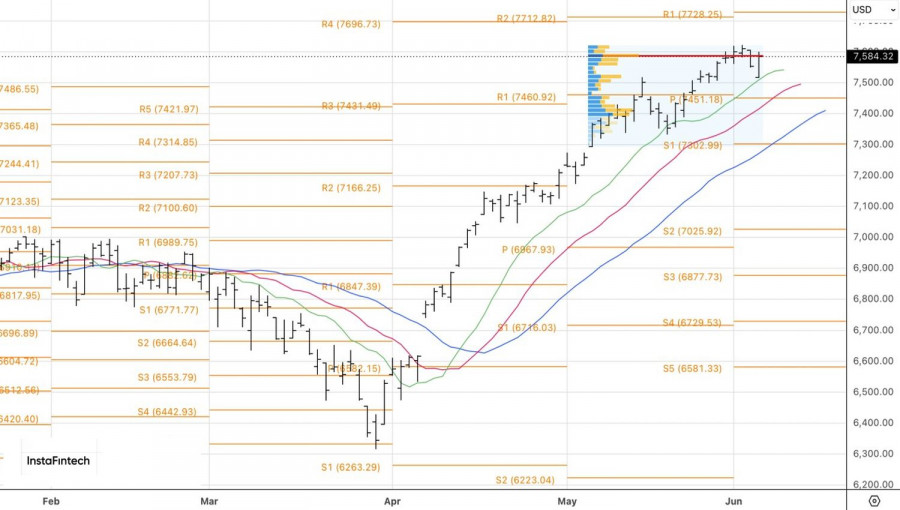
Technically, the daily chart shows that the S&P 500 managed to closed the opening gap down. That underscores bull strength and supports a buy-the-dip strategy toward the previously stated target of $7,700. A necessary condition is consolidation above fair value at $7,585.




















 コンタクトする