Zatímco akciový trh se po poklesu na začátku roku 2025 opět stabilizoval, investoři pozorně sledují vývoj u několika klíčových firem z různých sektorů.
Mezi nimi vyčnívají tři společnosti, které se i přes velmi odlišné výchozí podmínky dostaly zpět do středu pozornosti: čínský technologický gigant Alibaba Group, americká zdravotnická skupina UnitedHealth Group a biotechnologická firma Vertex Pharmaceuticals. Každá z těchto firem reprezentuje jiný segment trhu a každá čelí jinému typu výzvy i příležitosti.
Alibaba Group (BABA) patří dlouhodobě mezi největší technologické firmy v Asii. Její záběr sahá od e-commerce přes cloud computing až po umělou inteligenci a digitální média. Společnost v příštích třech letech plánuje investovat přibližně 53 miliard dolarů právě do svých AI iniciativ, což ji řadí mezi nejaktivnější hráče v tomto směru nejen v Asii, ale i globálně.

Alibaba je také největším poskytovatelem cloudových služeb v Asii a čtvrtým největším na světě. Dále provozuje dvě z největších online tržišť dle objemu prodaného zboží – Taobao a Tmall. Navzdory tomuto silnému postavení se její akcie obchodují za relativně nízký násobek budoucích zisků, konkrétně s forward P/E kolem 11,6. Také její PEG poměr, založený na pětiletém očekávaném růstu zisku, je velmi nízký – pouze 0,9.
Nižší ocenění firmy je do velké míry dáno jejím sídlem v Číně, kde investory dlouhodobě znepokojuje regulatorní prostředí. Přesto platí, že čínské úřady mají zájem, aby Alibaba jako národní technologický lídr uspěla, zejména v oblasti AI, kde si Čína stanovila ambiciózní cíle. Aktuální cena akcií pod 115 dolary tak podle mnohých pozorovatelů neodráží skutečný potenciál firmy.
V úplně jiné situaci se nachází UnitedHealth Group (UNH) – největší americká zdravotní pojišťovna, která zahrnuje i divizi Optum Rx, jednoho z největších poskytovatelů lékárenských benefitů. Společnost v posledních měsících prošla prudkým propadem akcií, který ji stáhl téměř o 50 % z předchozích maxim. Důvodem bylo nejen snížení finančního výhledu, ale i nečekané odstoupení tehdejšího generálního ředitele Andrewa Wittyho.
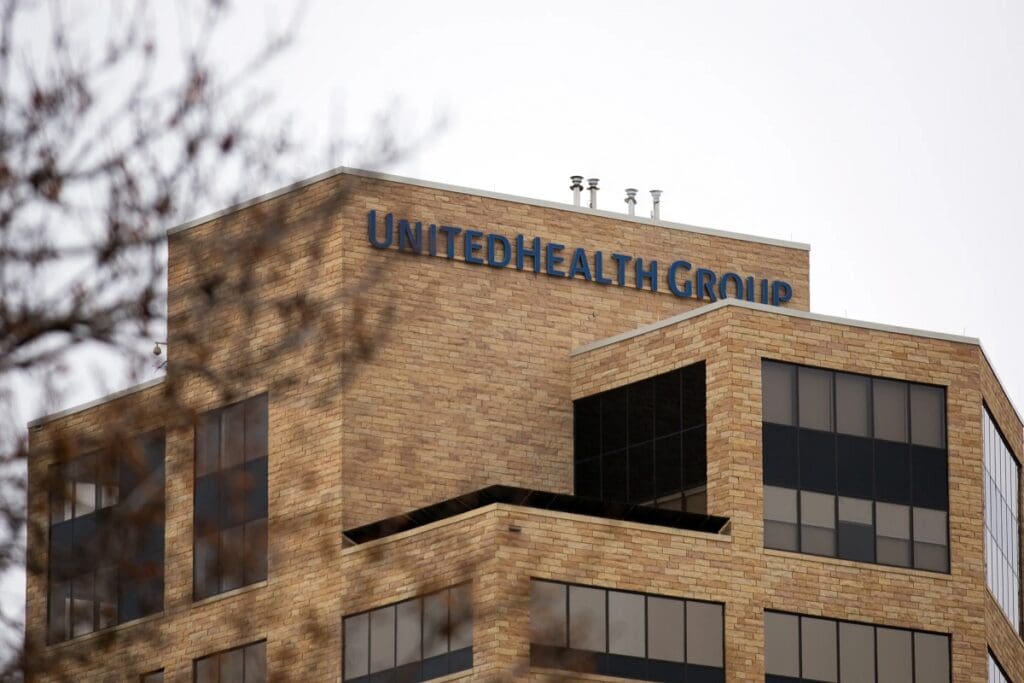
Na firmu se také zaměřilo americké ministerstvo spravedlnosti, které údajně zahájilo trestní vyšetřování. Další komplikací byly politické útoky prezidenta Trumpa vůči systému PBM (Pharmacy Benefit Managers), kde UnitedHealth prostřednictvím Optum Rx hraje klíčovou roli. Tato divize přitom tvoří přibližně třetinu příjmů celé skupiny.
I přes všechny zmíněné otřesy firma zůstává zisková a z pohledu mnoha analytiků podhodnocená. Akcie se obchodují s forward P/E pouze 13,7, což je nejnižší ocenění této firmy za poslední roky. Do vedení se vrátil zkušený manažer Stephen Hemsley, a firma plánuje řešit zvýšené náklady v programu Medicare Advantage úpravou pojistného pro další období. Přestože zůstává určitá míra nejistoty, firma si zachovává silnou tržní pozici a má potenciál postupně obnovit důvěru trhu.
Zatímco Alibaba a UnitedHealth zažívají protichůdný vývoj, Vertex Pharmaceuticals (VRTX) se drží na pozitivní trajektorii a její výhled zůstává stabilně optimistický. Tato biotechnologická společnost se sídlem v Massachusetts si dlouhodobě udržuje monopolní postavení v léčbě cystické fibrózy (CF), a očekává se, že její nejnovější lék Alyftrek pozici firmy ještě posílí.
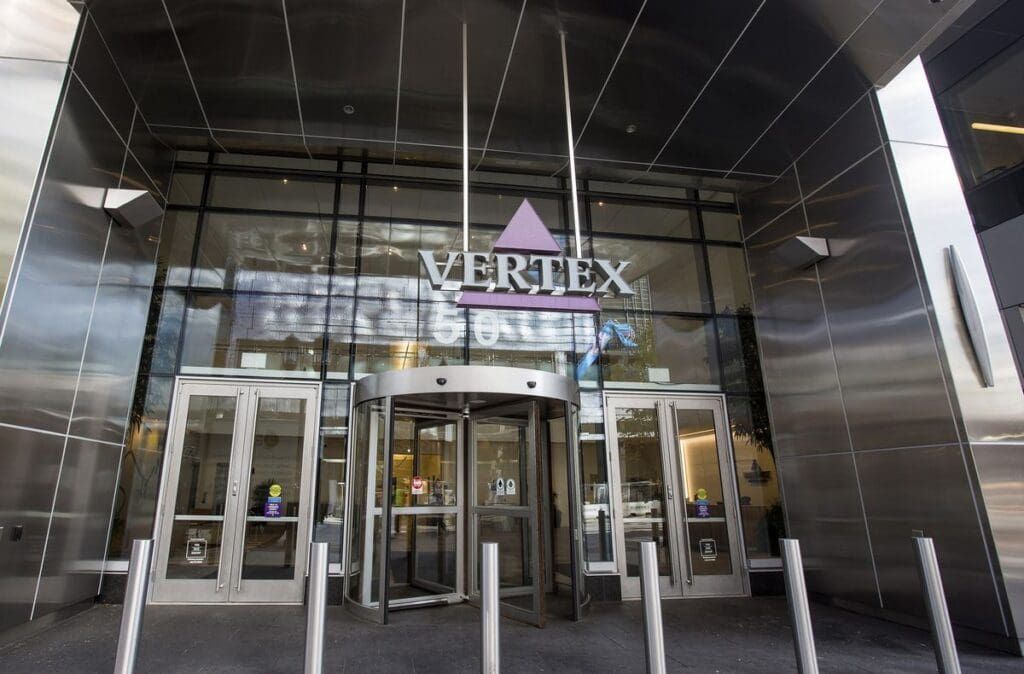
Vertex má však v rukávu i další trumfy. V lednu 2025 získal regulační schválení nový neopioidní lék proti bolesti Journavx, který je prvním svého druhu za posledních více než 20 let. Produkt má ambici stát se novým standardem v oblasti léčby bolesti bez rizika závislosti.
Firma zároveň pracuje na vývoji dalších terapií, například zimislecely – léčby založené na ostrovních buňkách pro pacienty s těžkou formou diabetu 1. typu. Další dvě experimentální terapie cílí na nemoci s větší pacientskou populací než CF. Výzkum je tedy aktivní a dobře diverzifikovaný.
Z hlediska ocenění se akcie Vertex obchodují s forward P/E blízko 25, ale její PEG poměr je díky silnému očekávanému růstu velmi nízký – pouze 0,58. Pro biotechnologickou firmu s jasným produktem na trhu, novými schváleními a pokročilým vývojem je to ukazatel výrazného růstového potenciálu.
The EUR/USD currency pair began the new week higher, but this growth quickly ended. Traders, having experienced an hour of euphoria at the market open, quickly regained their composure and realized that, essentially, nothing had changed following the announcement of the agreement between Iran and the US. Yes, the geopolitical backdrop has become much more pleasant, but why rush to sell the dollar if the deal could collapse at any moment? Moreover, this is not a comprehensive agreement but rather a preliminary deal focused on reopening the Strait of Hormuz and lifting some sanctions on Iran. The opening of the strait, whose blockade has already triggered a worldwide energy crisis, is undoubtedly good news. However, we have repeatedly mentioned that one wrong step by either side in the conflict could cause the strait to close again within an hour. Essentially, what is a blockade? It is Iran's readiness to destroy any ships attempting to cross the Strait. Simply put, they need to unveil their weapons and declare the Strait closed. That's all.
Thus, fierce optimism has shifted to yet another caution. There are too many "pitfalls" in this story that could spoil everything at any moment. The American currency is gradually losing ground, and a moderate decline in the dollar is likely the most logical scenario at this time. The market acknowledges that the opening of the Strait of Hormuz and the conclusion of the conflict are strong trump cards for the euro or pound, but should they dive into it recklessly?
Meanwhile, the Federal Reserve meeting is scheduled for this evening, with no changes to monetary policy parameters. It is worth noting that this will be the first meeting of the Fed under the new chairman, so we are unlikely to see any sharp movements. Kevin Warsh's speech draws attention, as many traders remain uncertain about the new Fed chairman's position. It is unlikely that Warsh will adopt a "hawkish" stance. Given the current inflation rate of 4.2%, he is unlikely to mention the need for monetary policy easing. Therefore, our forecast is a neutral stance with no significant announcements.
Regarding the outlook for the second half of 2026, we believe that the Fed will raise the key interest rate only when it becomes clear that the conflict in the Middle East is resolved, the Strait of Hormuz is opened, oil prices have returned to their usual levels, and inflation in the US is not declining. This would be an emergency measure, a last resort if the consumer price index does not begin to slow down on its own. Thus, we would not expect any tightening of Fed policy by the end of summer, which would deprive the dollar of another important support factor.
In conclusion, we do not anticipate a significant drop in the US currency due to geopolitical issues, as we still cannot confidently say the conflict is over. However, we also do not expect the dollar to rise, as there are no grounds for it. Consequently, a flat or moderate decline in the dollar seems likely.
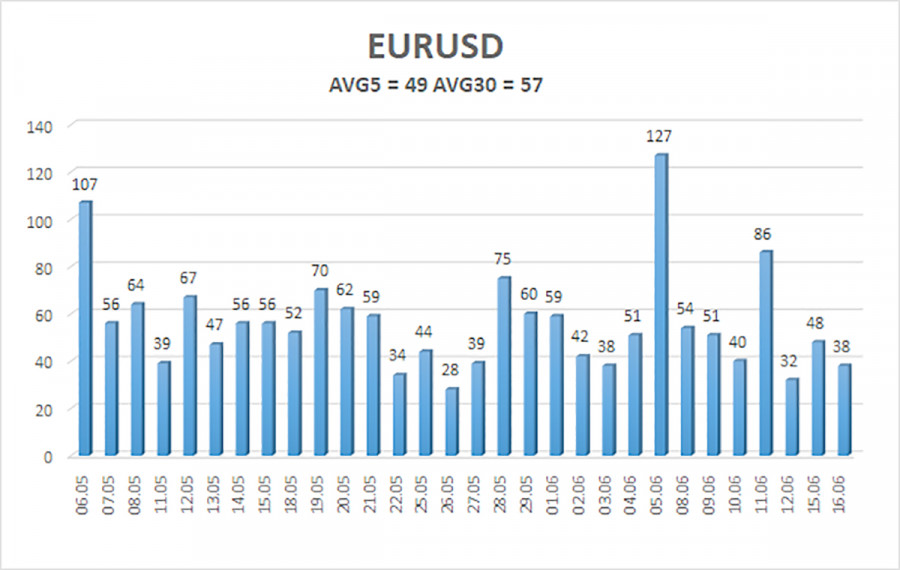
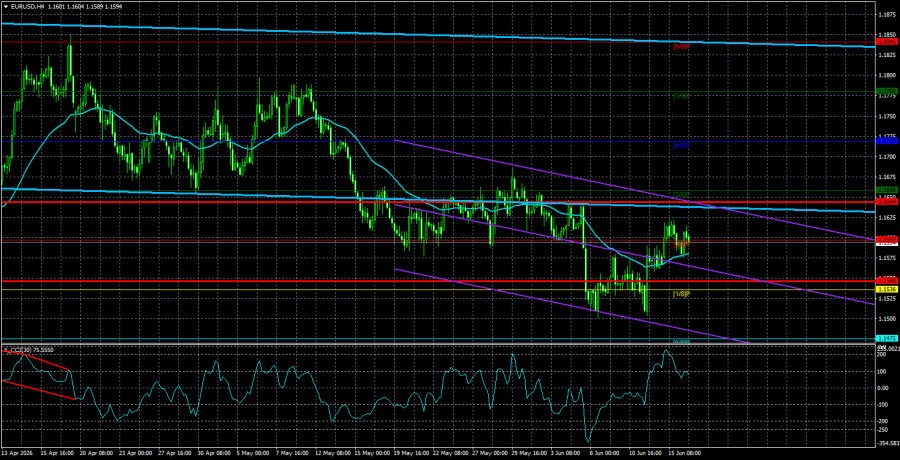
The average volatility of the EUR/USD currency pair over the last 5 trading days as of June 17 is 49 pips, which is considered "average." We expect the pair to move between levels 1.1546 and 1.1644 on Wednesday. The upper channel of linear regression has turned upwards, indicating a shift to an upward trend. The CCI indicator has entered the overbought area, warning of a possible completion of the correction.
S1 – 1.1597
S2 – 1.1536
S3 – 1.1475
R1 – 1.1658
R2 – 1.1719
R3 – 1.1780
The EUR/USD pair continues its downward movement, presumably a correction within the global upward trend. The overall fundamental backdrop for the dollar remains extremely negative, and only geopolitical factors regularly support it. When the price is below the moving average, short positions can be considered with targets of 1.1536 and 1.1475. Above the moving average line, long positions are relevant with targets of 1.1719 and 1.1780. Hopes for peace between Iran and the US have increased this week, causing the dollar to lose its main support factor.
Linear regression channels help determine the current trend. If both are directed in the same way, then the trend is strong right now;
The moving average line (settings 20,0, smoothed) defines the short-term trend and the direction in which trading should currently be conducted;
Murray levels are target levels for movements and corrections;
Volatility levels (red lines) represent the probable price channel in which the pair will spend the next day, based on current volatility indicators;
The CCI indicator's entry into oversold territory (below -250) or overbought territory (above +250) indicates an approaching trend reversal in the opposite direction.
RÁPIDOS ENLACES

















 Contáctenos