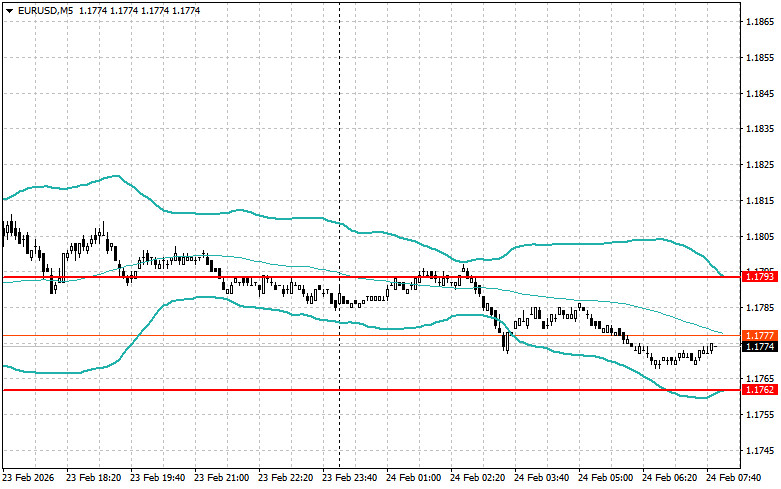
Despite the U.S. tightening protectionist measures, the American dollar managed to regain all losses against riskier assets.
The lack of clarity from Washington has created confusion worldwide regarding Trump's tariff policy. The uncertainty surrounding trade relations and potential retaliatory measures from other countries has compelled investors to seek refuge in assets considered safer, with the U.S. dollar traditionally occupying this role.
However, this situation is double-edged. On one hand, the demand for the dollar as a safe haven may temporarily stabilize its exchange rate or even lead to some strengthening. On the other hand, a persistent trade war and policy unpredictability may undermine confidence in the American economy in the long run, which would be detrimental to the dollar.
Today, there is no statistical data from the eurozone in the first half of the day, so pressure on the euro may persist. The absence of new economic data that could signal recovery or, conversely, deterioration in the region leaves the euro vulnerable to external factors. Traders, deprived of the ability to rely on specific figures, tend to react to broader market sentiment and geopolitical events. Factors that could continue to exert pressure on the euro include the potential escalation of trade relations between the EU and the U.S. and ongoing geopolitical tensions.
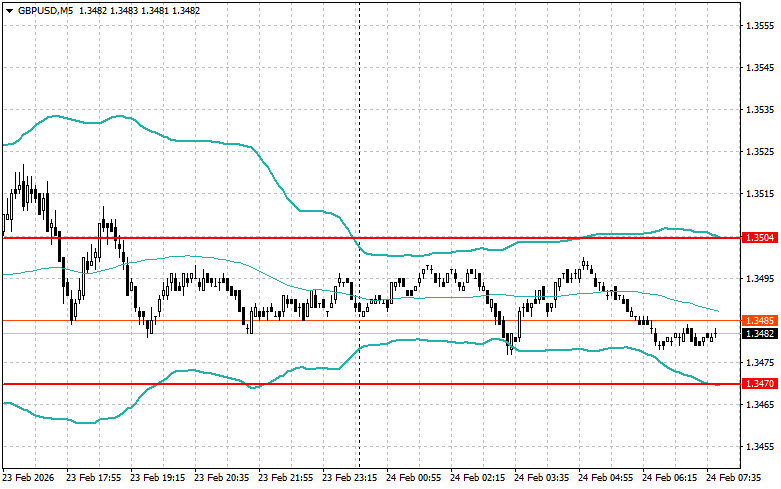
As for the British pound, traders will focus on the publication of retail sales data from the Confederation of British Industry in the first half of the day. This metric is an important indicator of consumer activity and, consequently, the state of the British economy. Strong figures could support the pound, signaling robust demand and potential GDP growth, while weak results could weigh on it. In the second half of the day, the focus will shift to the Bank of England. Parliamentary hearings will take place, during which the central bank's latest reports on monetary policy will be discussed. This event offers a unique opportunity to gain deeper insight into the views of the Monetary Policy Committee members on the current economic situation, inflation risks, and future interest rate prospects.
If the data aligns with economists' expectations, it's best to act using the Mean Reversion strategy. If the figures significantly exceed or fall short of economists' expectations, the Momentum strategy would be the best approach.




















 コンタクトする