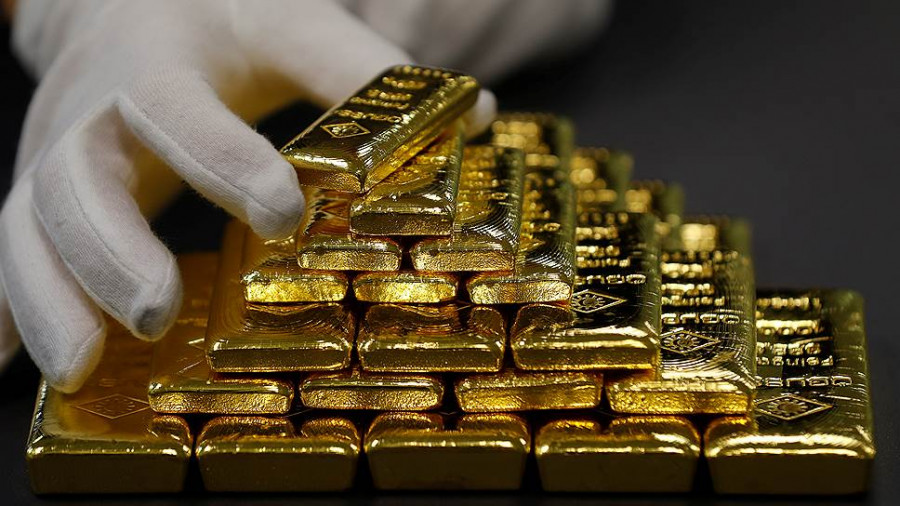
Gold fell in the evening, then recovered losses during Asian trading and moved into positive territory, but it plunged again ahead of the European open, heading for last month's low around $4,000/oz. Such intraday amplitude shows the market has not yet decided whether easing inflation expectations or the pressure from high bond yields will prevail — and that very clash has driven the metal's movement for the second day running.
Gold rose 0.9% to $4,192/oz after a 0.6% decline the day before, when softer inflation prints reduced the odds of a Fed rate hike at the next meeting. The core Personal Consumption Expenditures index — the Fed's preferred measure of core inflation — grew 0.2% in August, below expectations, and the prior month was revised down. That dynamic benefits gold holders at the moment of the release but hurts traders who had counted on continued post-hike selling after the Fed's September increase.
At the same time, long-term US Treasury yields climbed on Wednesday to multi-year highs, as resilient consumer spending strengthened conviction that the economy can withstand higher rates. Data showed consumer outlays in August growing at the fastest pace in more than a year, prompting traders to lower the probability of an October Fed hike to roughly 36% from nearly 70% at the start of the week. The picture is therefore contradictory: the odds of a rate hike decrease while long yields rise, and that contradiction leaves gold vulnerable to further selling.
Gold closed September down about 6% — its worst monthly performance since June — after the Fed's first rate increase since 2023 and the signal that more tightening might follow. Yet geopolitics has been working the other way and providing support for the metal.
Geopolitical uncertainty, particularly around stalled US-Iran ceasefire talks, continues to provide defensive support, while higher oil prices remain an inflationary risk — the main threat to gold. So, the metal is being pulled between two opposite forces: a geopolitical premium pushing it up and high yields plus uncertainty over rates and inflation pulling it down. That explains the violent intraday swings.
Silver rose 0.9% to $60.94/oz after falling 1.7% in the previous session to an eight-week low. Platinum and palladium also advanced.
Traders will watch the US labor market report later in the week as the next key guide to the Fed's rate path. Those data will determine whether the odds of an October hike bounce back to early-week levels or continue to decline following August's inflation prints.
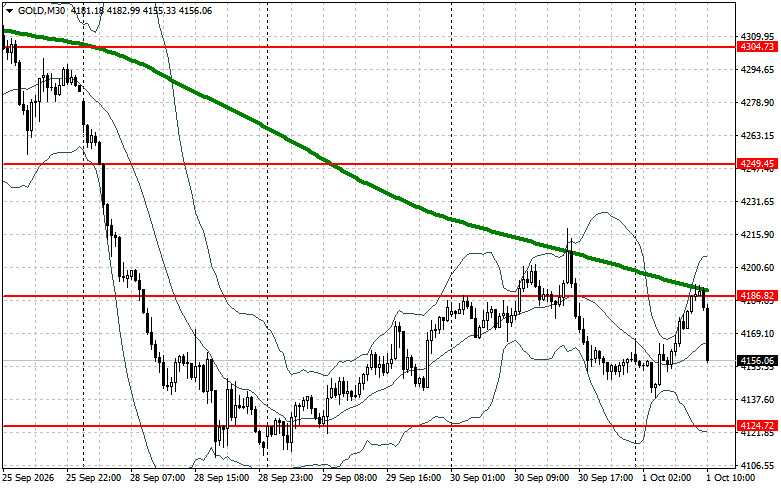
Technical outlook for gold
Buyers need to take the nearest resistance at $4,186 to aim for $4,249, above which further advances become difficult. The next extended target is around $4,304. On the downside, bears will try to seize control of $4,124; if they succeed, a breakdown of the range would seriously damage bull positions and push gold toward a low of $4,062 with a prospect of reaching $4,047.

PAUTAN SEGERA



















 Hubungi Kami