Společnost Adobe Inc oznámila hospodářské výsledky, které ukázaly pozitivní vývoj v oblasti digitálních médií a narůstající vliv umělé inteligence na poptávku po kreativních nástrojích.
Přesto však akcie společnosti opět zaznamenaly pokles. Jedná se už o sedmý pokles v osmi čtvrtletích, což vyvolává u investorů i analytiků oprávněné otázky ohledně budoucnosti této technologické společnosti.
Navzdory tomu, že Adobe (ADBE) mírně zvýšila výhled tržeb na celý fiskální rok, trh reagoval negativně a akcie klesly o dalších 5,3 %. Tento vývoj navázal na delší sestupný trend, v jehož rámci akcie ztratily od začátku roku 2024 zhruba 34 % své hodnoty. Hlavní příčinou jsou obavy z rostoucí konkurence v oblasti kreativního softwaru a nejasnosti kolem toho, zda bude generativní AI pro Adobe přínosem, nebo naopak hrozbou.

Společnost se snaží přesvědčit trh, že její inovace v oblasti generativní umělé inteligence přinesou významné obchodní výsledky. Analytik Kirk Materne z Evercore ISI však upozorňuje, že současný výhled ročního růstu opakujících se tržeb (ARR) na úrovni 11 % v segmentu digitálních médií působí jako náznak zpomalení ve druhé polovině roku. Podle jeho slov sice může být tento výhled konzervativní, ale vzhledem k tomu, že nejsou na obzoru žádné zásadní produktové novinky, není příliš pravděpodobné, že by v krátkodobém horizontu přilákal nové investory.
Materne rovněž zmiňuje, že bez aktivnější komunikace ze strany vedení Adobe, která by přeformulovala investiční příběh a vysvětlila, proč by si akcie měly zasloužit vyšší ocenění, zůstane tržní sentiment zdrženlivý. Přesto ponechal své hodnocení akcií na úrovni „outperform“ s cílovou cenou 475 USD.
Podobně smíšený pohled nabízí také Brad Zelnick z Deutsche Bank. Ten sice uznává, že Adobe je vysoce kvalitní společnost, ale zároveň pochybuje, že by aktuální výsledky výrazně změnily tón diskusí na Wall Street. Zelnick očekává, že firma musí ve svých finančních výsledcích přinést přesvědčivější důkazy o úspěchu v oblasti AI, aby mohla akcie prorazit současné cenové pásmo. Jeho hodnocení akcií zůstává na úrovni „držet“ a cílová cena činí rovněž 475 USD.
Jordan Klein z Mizuho upozorňuje na zajímavou otázku: kdo vlastně dnes ještě chce vlastnit hodnotově orientované akcie velkých softwarových firem, které působí jako „poškozené bývalé růstové tituly“? I když nevěří v prudký pád ceny akcií Adobe, zdá se mu, že firma jednoduše ztratila svou někdejší dynamiku. Upozornil také na to, že jiné softwarové firmy, například Oracle, v současnosti zažívají zrychlení obchodních trendů, což staví Adobe do méně příznivého světla.
Na druhé straně, jeho kolega Gregg Moskowitz, také z Mizuho, nabízí o něco optimističtější výhled. Uznává sice, že akcie Adobe byly za posledních 12 měsíců pro investory frustrující, ale zároveň poukazuje na pozitivní vývoj v oblasti monetizace nástrojů s generativní AI. Zmiňuje také chystané zvýšení cen, které by mohlo přispět k růstu tržeb v nadcházejících obdobích. Navzdory vyšší makroekonomické nejistotě Moskowitz považuje výhled opakujících se tržeb pro fiskální rok 2025 za důvěryhodný a udržitelný. Jeho hodnocení zůstává nadprůměrné, i když cílovou cenu snížil z 575 USD na 530 USD.
Ačkoli Adobe zůstává stabilním hráčem na poli kreativního softwaru, její ocenění se dostalo pod tlak. Očekávání spojená s umělou inteligencí se zatím nenaplňují tak rychle, jak by si trh přál, a bez hmatatelných výsledků ve finančních výkazech zůstávají investoři opatrní. Přesto se nezdá, že by šlo o firmu, která by ztrácela technologické vedení nebo inovační potenciál – spíše bojuje s načasováním, očekáváním trhu a nutností lépe komunikovat svůj směr a vizi.
V tomto kontextu může být aktuální cenový propad příležitostí pro dlouhodobé investory, kteří věří, že Adobe své inovační projekty v oblasti AI přetaví v budoucnu v silné příjmové toky. Pokud ale firma neprokáže schopnost přenést technologický pokrok do konkrétních čísel, bude těžké přesvědčit širší investorskou veřejnost, že si akcie zaslouží vyšší ocenění.

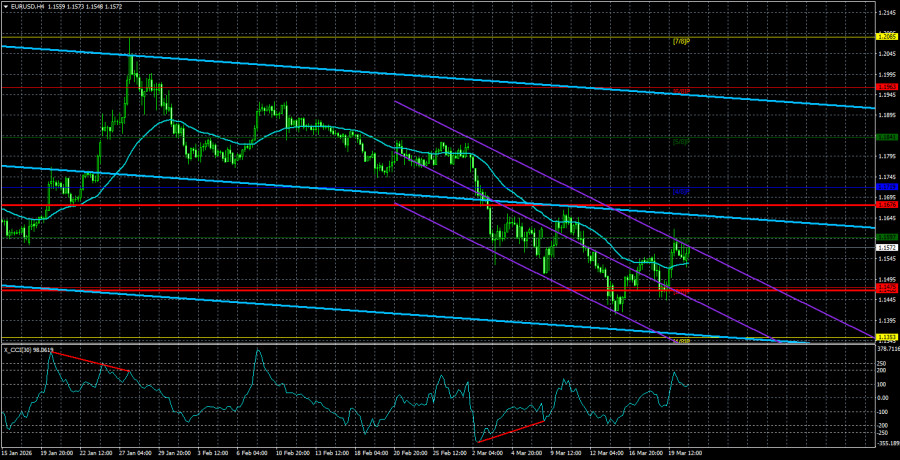
The EUR/USD currency pair attempted to extend its nascent upward move on Friday, but did so poorly. At the same time, the British pound plummeted, without any particular reason for it. Thus, after the previous week, traders received important information from central banks, which opened the door for the bulls. However, the bulls themselves may not be willing to enter these doors, and those doors could be blocked on the other side by geopolitical events.
Essentially, the ECB has given the green light for tightening monetary policy, unlike the Fed. Therefore, the growth of the euro would be entirely justified in the near term, based on both fundamentals and the technical necessity for correction. But will these factors have any significance for the market? Over the weekend, Donald Trump announced that if Iran does not unblock the Strait of Hormuz within 48 hours, America will deliver devastating strikes on energy facilities. For some reason, we believe that Iran will not unblock the Strait of Hormuz under pressure from threats, as Tehran has repeatedly shown that it is not afraid of threats and has nothing to lose. Thus, as early as Monday or Tuesday, the United States could launch new strikes on Iranian infrastructure, and what follows next is probably clear to everyone.
There will likely be a series of retaliatory strikes against oil and gas infrastructure in the region and against American military bases. Once those targets are exhausted, Iran will begin striking from longer distances. Just recently, Iran attacked an American military base located more than 2,000 km away. Thus, Tehran has the necessary missiles for long-range strikes. This marks a new escalation in the conflict and potentially expands its geography to include attacks on European countries.
Consequently, regardless of geopolitical conditions or the macroeconomic backdrop, the dollar could resume rising at any time. Of course, we, like all reasonable people, hope that the situation in the Middle East does not worsen further. Otherwise, oil prices could indeed rise to $200 per barrel. However, the main peacemaker of modern times, Trump, continues to see Iran as the main threat to the world and himself as the savior of the world from the Iranian threat.
Trump can end this war at any moment, but what would that change? Iran is not willing to end the confrontation. Trump has stirred up a hornet's nest and is now desperately pretending to seek to unblock the Strait of Hormuz and end the conflict—another good face in a bad game. Thus, if it were not for geopolitics, we would expect only growth in the euro, as before. But in this case, it is crucial for traders to constantly monitor news from the Middle East to be prepared for a new decline in the EUR/USD pair.
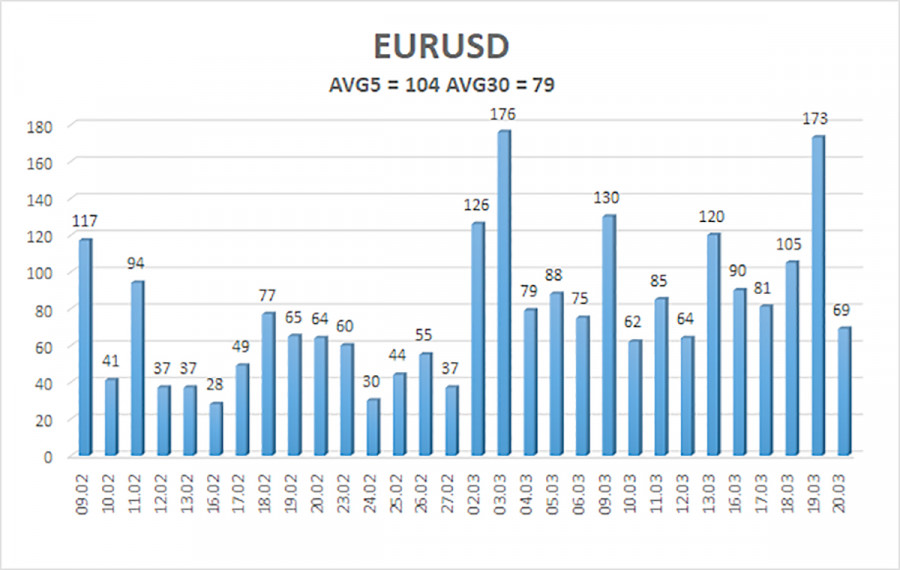
The average volatility of the EUR/USD currency pair over the last 5 trading days as of March 23 is 104 pips, which is considered "average." We anticipate movement within the range of 1.1468-1.1676 on Monday. The upper linear regression channel has turned sideways, indicating a trend reversal. The CCI indicator has again entered the overbought area and formed a "bullish" divergence, signaling the potential completion of the downward trend.
S1 – 1.1475
S2 – 1.1353
S3 – 1.1230
R1 – 1.1597
R2 – 1.1719
R3 – 1.1841
The EUR/USD pair has begun to correct and has a chance of recovery. The global fundamental background remains extremely negative for the dollar. However, for over a month now, the market has focused solely on geopolitics, rendering all other factors almost insignificant. If the price is below the moving average, shorts can be considered with targets at 1.1475 and 1.1353. If above the moving average line, long positions remain relevant, with targets at 1.1963 and 1.2085, but for such a move to occur, the geopolitical backdrop must begin to improve even slightly.
Linear regression channels help identify the current trend. If both are directed in the same way, it indicates a strong trend;
The moving average line (settings 20,0, smoothed) determines the short-term trend and direction in which trading should currently proceed;
Murray levels are target levels for movements and corrections;
Volatility levels (red lines) indicate a probable price channel in which the pair will trade over the next 24 hours based on current volatility readings;
The CCI indicator entering the oversold area (below -250) or the overbought area (above +250) indicates that a trend reversal in the opposite direction is approaching.
ລິ້ງດ່ວນ



















 ຕິດຕໍ່ພວກເຮົາ