Jižní Korea a Spojené státy diskutují o spolupráci v oblasti lodního stavitelství, která by mohla zahrnovat investice do modernizace amerických loděnic a větší pomoc při opravách amerického námořního loďstva, zatímco Soul usiluje o lepší celní podmínky, uvedly vládní a průmyslové zdroje.
Americký prezident Donald Trump, který si jako prioritu stanovil oživení stárnoucího amerického lodního průmyslu, aby dokázal držet krok s Čínou, opakovaně nadhodil myšlenku spolupráce s moderním lodním průmyslem Jižní Koreje.
Po investicích v řádu miliard dolarů do lodního průmyslu je Čína největším výrobcem lodí na světě. Podle Centra pro strategická a mezinárodní studia má také největší námořní bojové síly na světě, které provozují 234 válečných lodí oproti 219 lodím amerického námořnictva.
„Jižní Korea může využít stavbu lodí jako páku k získání určité výhody v jednáních o clech,“ řekl Kim Suk Kyoon, bývalý komisař korejské pobřežní stráže a odborník na námořní strategii.
Tlak na Soul, aby dosáhl dohody o dovozních clech, se zvýšil poté, co Japonsko tento týden uzavřelo obchodní dohodu s USA. Jihokorejští představitelé jsou ve Washingtonu na obchodních jednáních, ale páteční schůzka na vysoké úrovni byla kvůli kolizi termínů odložena.
Jižní Korea je druhým největším stavitelem lodí na světě a zdroj s přímými informacemi o jednáních uvedl, že jakékoli partnerství by mělo zahrnovat investice jihokorejských společností v USA a větší pomoc v oblasti oprav a údržby.
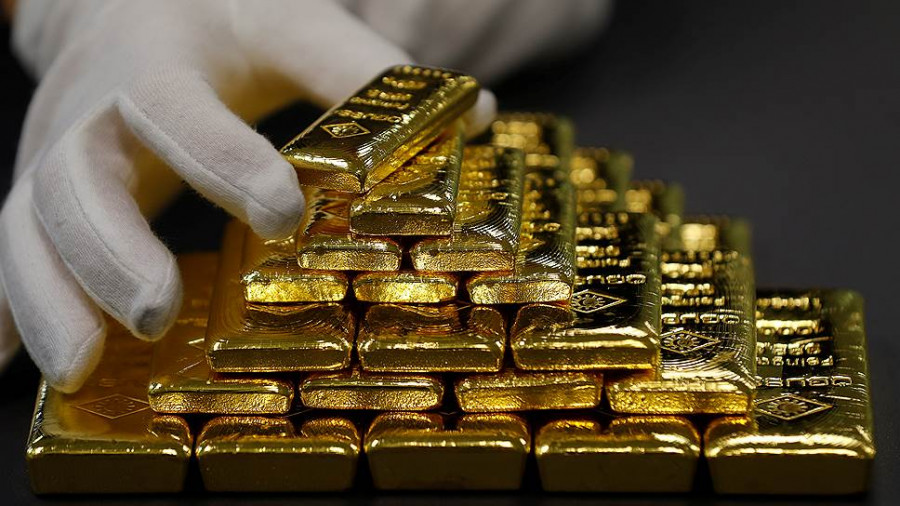
Gold rose 0.5 percent to $4,400 per ounce despite events in the Middle East. Silver added 0.8 percent to $66.298, platinum gained 1 percent, and palladium was unchanged.
So why aren't renewed inflation risks weighing on gold? This rise stems entirely from the currency space. U.S. forces destroyed five Iranian oil tankers near Kharg Island, Iran's main export hub, in response to attempted missile attacks on a U.S. warship. Brent approached $100 per barrel, and under normal circumstances such escalation would lift the safe-haven metal. Yet gold rose not because of geopolitics but despite it.
The problem is the dollar, which remained under pressure after the Japanese yen strengthened to a seven-month high, providing some support to gold. Here is the paradox driving gold's dynamics now: military escalation lifts oil, oil boosts inflation expectations, inflation expectations raise the odds of Federal Reserve tightening, and tightening hits a non-yielding asset. Geopolitical risk, which traditionally helped gold, now works against it through the rate channel. The only real support is a weakening dollar — and hawkish expectations for the Bank of Japan, a factor unrelated to gold or the war, drive the dollar's weakness.
The bigger danger is an inflation surprise that shifts rate odds toward hikes and creates massive pressure on the precious metal. Technically, gold has been trapped for three months in a narrow range around $4,400 since the July bounce from about $4,000.
How likely is an inflation-surprise scenario? The risk is asymmetric, and the market may underestimate divergence within the report. Economists expect CPI to rise about 0.4% m/m (driven by higher gasoline), while core monthly CPI should remain near 0.2%, taking annual core inflation to about 2.4% — the lowest since 2021. That combination gives both camps inside the Fed arguments, so gold's reaction may not be decisive.
The long-term picture remains intact despite current turbulence. Major asset managers continue rebuilding gold positions as a portfolio hedge, and central bank buying persists. These investors focus on fiscal sustainability and dollar diversification, not the outcome of a single meeting.
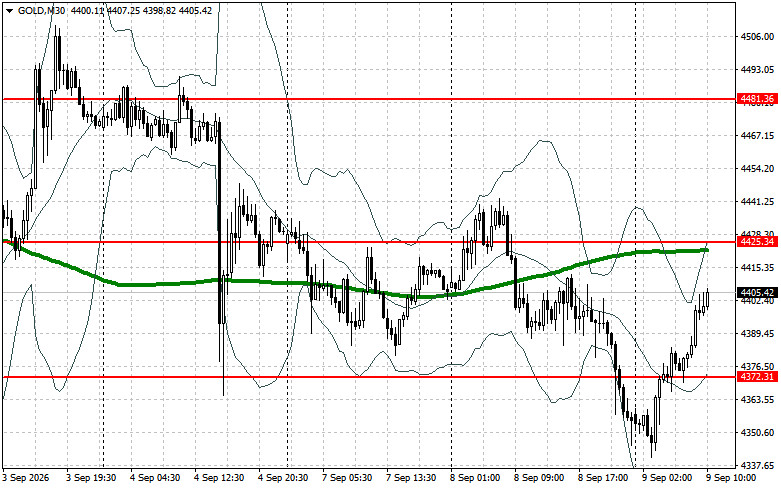
I expect that with core inflation around 2.4%, gold should move toward the upper boundary of the range near $4,450–4,500, as the market would read that as justification for a pause. If inflation falls, the decline will be limited to the $4,250 area, where dip buyers have been active for three months.
Regarding the technical picture, buyers need to reclaim the nearest resistance at $4,425 to target $4,480, above which a breakout would be difficult. The farther target sits near $4,540. If gold falls, bears will try to take control of $4,372; a break below that range would seriously damage bulls and push gold toward the $4,304 low, with a further prospect of $4,249.


















 আমাদের সাথে যোগাযোগ করুন